Car Camping Essentials You Should Always Pack
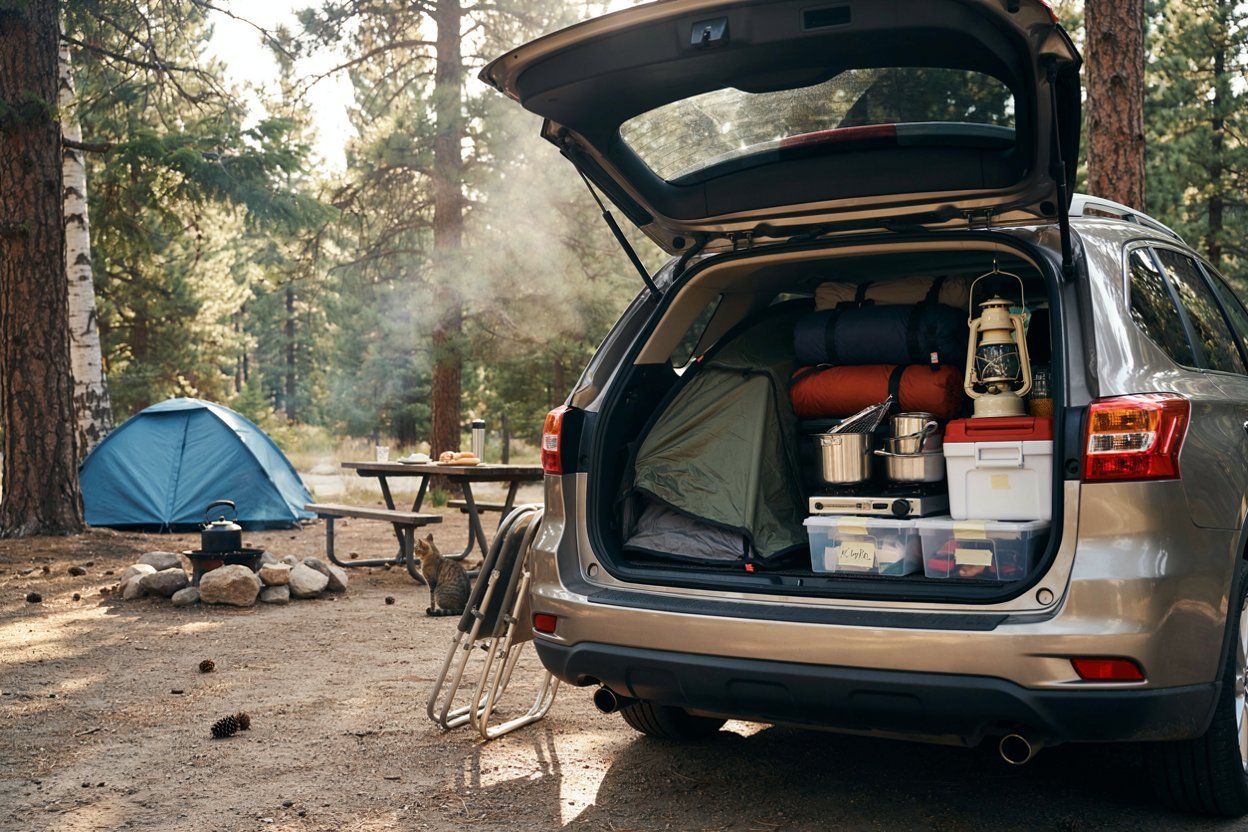
Car camping has become one of my favorite ways to spend a weekend outdoors because it gives me the freedom to enjoy nature without having to carry everything on my back. I can bring comfortable bedding, extra food, cooking supplies, warm clothes, and a few little things that make the campsite feel much more comfortable.
At the same time, having a car nearby can make it very easy to overpack. I have learned that bringing more gear does not always make a camping trip better.
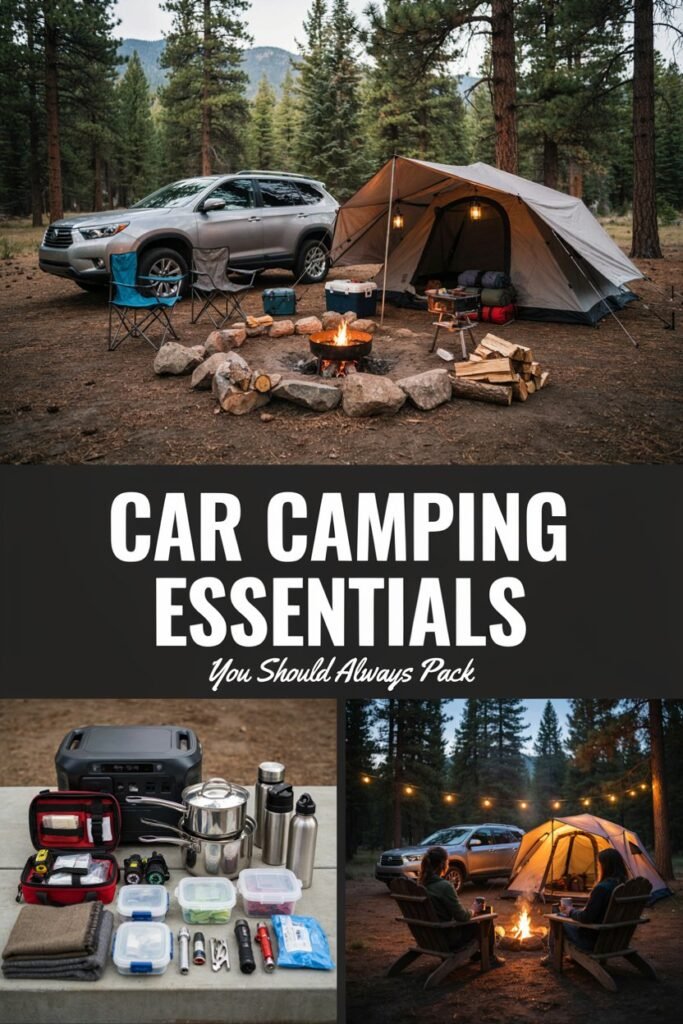
The right essentials are the items that solve real problems and make sleeping, cooking, staying organized, and dealing with unexpected weather easier.
After packing for different camping trips with my family, I have also learned which items we actually use and which ones tend to take up valuable space in the car. In this guide, I am sharing the car camping essentials I recommend packing, along with practical tips that can make your next camping trip simpler and more enjoyable.
What Do You Really Need for Car Camping?
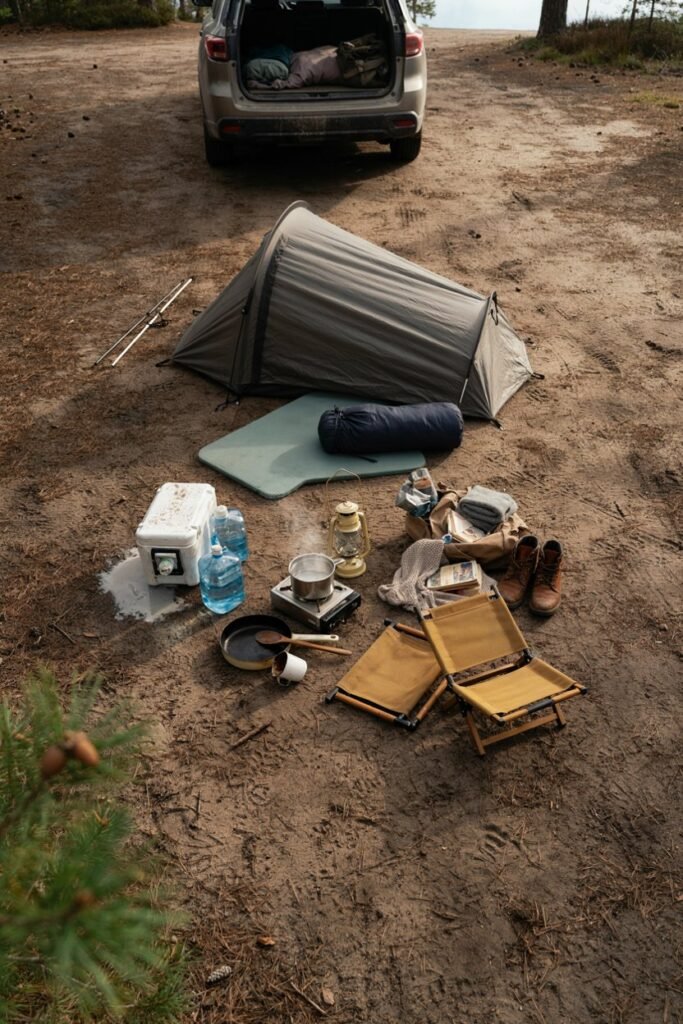
One thing I have learned from packing the car for camping is that it helps to think about the trip in categories rather than throwing individual items into every available space.
You need something to sleep in, something to sleep on, food and water, a way to prepare meals, lighting, clothing, personal items, and basic safety supplies. Once those needs are covered, you can decide which comfort items are worth bringing.
For a typical weekend car camping trip, my essential categories include:
- Tent and tent accessories
- Sleeping bag or warm bedding
- Sleeping pad or air mattress
- Pillow
- Camp chairs
- Cooler
- Drinking water
- Camp stove and fuel
- Basic cookware
- Plates, bowls, cups, and utensils
- Headlamp or flashlight
- Lantern
- First aid kit
- Toiletries
- Weather appropriate clothing
- Insect protection
- Phone charger and power bank
- Trash bags
- Basic car emergency supplies
I like starting with this basic list because it prevents me from getting distracted by all the extra camping gear available in stores. There is always another gadget that looks useful, but if it does not make the trip safer, easier, or more comfortable, I usually leave it at home.
1. A Reliable Tent
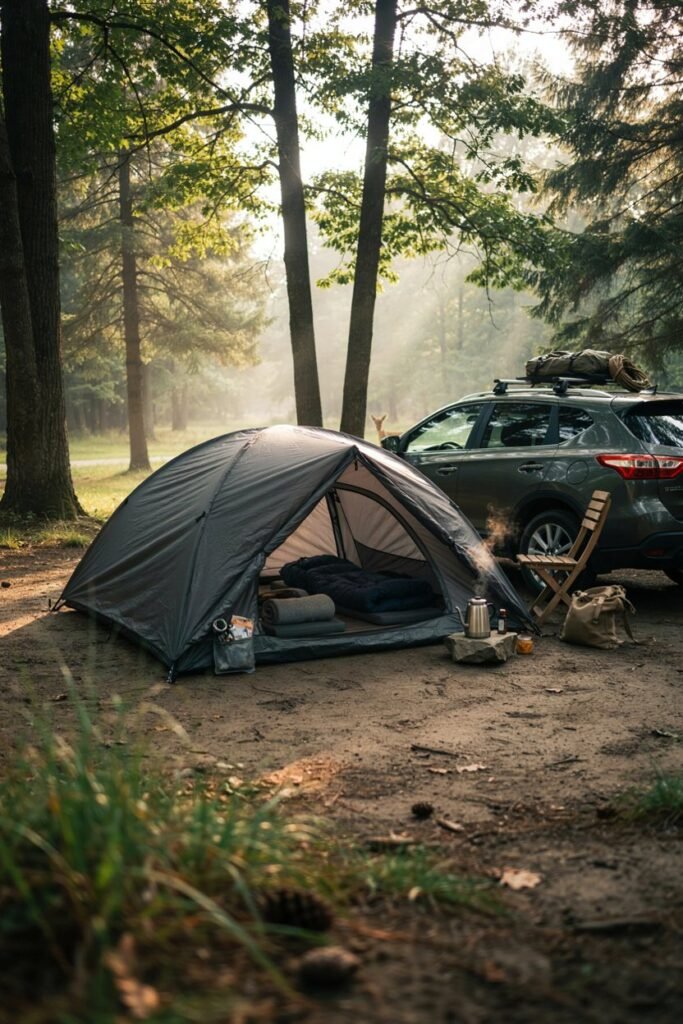
Your tent is one of the most important things you will pack because it becomes your sleeping space and your protection from rain, wind, insects, and changing temperatures.
For car camping, I prefer having a little more room than I would choose for backpacking. Since the car carries the equipment, I do not have to worry as much about every extra pound or how small the tent packs down.
When choosing a tent, pay attention to its capacity, setup process, ventilation, waterproofing, and available storage space.
If you are camping alone, a two person tent can give you useful extra room for clothing and personal belongings. If you are camping with your family, I would rather have enough space for everyone to sleep comfortably than squeeze into a tent that is technically large enough but feels cramped.
I also recommend practicing the tent setup at home before your trip.
This is something I appreciate more after having to set up camp when everyone is tired or when the weather is not cooperating. Knowing where the poles go and how everything attaches saves time and frustration.
Do Not Forget the Tent Footprint
A tent footprint is another item that can be easy to overlook.
It provides an additional layer between the bottom of your tent and the ground. Depending on the tent and camping conditions, it can help protect the tent floor from moisture, dirt, and rough surfaces.
If your tent manufacturer recommends a specific footprint, I would use that rather than assuming any large piece of material will work.
One important detail is making sure the footprint does not extend beyond the edges of the tent. If rain collects on the exposed material, water can potentially run underneath the tent.
2. Sleeping Bag or Warm Bedding
A comfortable sleeping setup can make a huge difference in how you feel the next morning.
I have found that people often focus heavily on the tent and forget that you can have a perfectly good tent and still have a miserable night if your bedding is uncomfortable or not warm enough.
For colder trips, a sleeping bag with an appropriate temperature rating is important. For warmer weather, a lighter sleeping bag, camping blanket, or sheet system may be enough depending on the conditions.
Do not choose a sleeping bag simply because the temperature printed on the package sounds impressive. Think about the actual temperatures you expect during your trip and whether you tend to sleep warm or cold.
I also like bringing an extra blanket when there is room in the car. It does not take much space compared with many camping items, and having another layer available can be useful when temperatures drop unexpectedly.
3. A Comfortable Sleeping Pad
The ground can feel much harder than it looks once you have spent several hours lying on it.
A sleeping pad provides cushioning, but it also helps insulate you from the cold ground. This is especially important during spring, fall, and cold weather camping.
There are several options, including foam sleeping pads, inflatable sleeping pads, and larger camping air mattresses.
For short trips, I usually think about the balance between comfort and how much space the sleeping setup takes inside the car.
If you are camping with children, a thicker air mattress can be tempting because it feels similar to sleeping at home. However, remember that an air mattress mainly provides cushioning and does not necessarily provide the same insulation as a properly insulated sleeping pad.
If you regularly camp in cooler weather, pay attention to the insulation rating of the sleeping pad rather than looking only at thickness.
4. Bring Your Own Pillow
A camping pillow is convenient, but you can also use a regular pillow from home if you have enough room.
This is one area where I am willing to sacrifice a little packing space because sleeping comfortably matters to me.
A pillow that supports your neck can make it much easier to settle down after a long day outside. If you do bring a regular pillow, I recommend placing it inside a clean pillowcase and storing it in a large bag during transportation.
That keeps it from picking up dirt, food smells, or moisture while the rest of your camping gear is being loaded and unloaded.
5. Camping Chairs
Camping chairs are not essential for survival, but they are one of the first comfort items I would recommend for car camping.
After spending the day hiking, exploring, cooking, or sitting around the campsite, having somewhere comfortable to sit becomes much more valuable.
I like having a chair for each person rather than expecting everyone to sit on coolers or logs. If you are camping with children, lightweight folding chairs can also give them their own comfortable place to eat or relax.
When choosing chairs, consider how easily they fold, how much space they take in the vehicle, and how simple they are to carry from the parking area to the campsite.
For car camping, I do not think you need to spend a fortune on a chair. A sturdy folding camping chair that is comfortable and easy to store can do the job perfectly well.
6. A Small Camp Table
A camp table is another item that can make a campsite much easier to manage.
I use a table as a dedicated space for food preparation, cooking supplies, drinks, and small items that I do not want sitting directly on the ground.
It also helps keep the campsite organized.
Without a table, it is surprisingly easy to end up placing utensils, food containers, plates, and cooking equipment on different surfaces around the campsite. When it is time to clean everything up, you are left searching for small items that have been scattered everywhere.
A folding table does not need to be huge. Choose one that fits comfortably in your car and provides enough space for the way you normally cook.
If you are camping for only one night and already have a suitable picnic table at your campsite, you may not need to bring one at all. This is a good example of why I prefer planning around the actual campsite instead of automatically packing every piece of camping equipment.
7. A Cooler for Food and Drinks
A good cooler becomes one of the hardest working items at a car camping site.
I use mine for keeping food, drinks, dairy products, meat, fruit, and other items cold during the trip. The size you need depends on how many people are camping and how long you will be away.
For a short weekend trip, I try not to fill the cooler with far more food than we can realistically eat.
Pre chilling the cooler and the food before leaving home can help keep everything cold longer. I also prefer organizing food in containers or sealed bags so that the cooler does not become a messy collection of loose packages.
Another small habit that has made camping easier for me is keeping drinks in a separate cooler when possible. It means the food cooler does not have to be opened every time someone wants a drink.
If you are camping somewhere warm, pay attention to how long perishable food stays at safe temperatures and follow appropriate food safety practices.
8. Plenty of Drinking Water
Water is one of those things I would rather have too much of than too little.
Even when a campground has drinking water available, I still like bringing some water with me when practical. It gives me a backup and means I do not have to immediately search for a water source after arriving.
Remember that water is not only for drinking.
You may need it for:
- Cooking
- Making coffee
- Washing dishes
- Cleaning your hands
- Brushing your teeth
- Basic campsite cleanup
The amount you need depends on the weather, length of the trip, activities, campground facilities, and number of people.
Before leaving, I always recommend checking whether your campground provides potable water and whether there are any restrictions on collecting or using water from natural sources.
9. Camp Stove and Fuel
If you plan to cook at camp, a reliable stove is worth packing.
For most car camping trips, you do not need an elaborate outdoor kitchen. A simple camping stove can be enough to boil water, heat food, make coffee, and prepare a basic breakfast or dinner.
The important thing is remembering the fuel.
A stove without fuel is not very useful, and this is exactly the kind of small mistake that can turn a simple dinner plan into an inconvenient situation.
Before leaving home, I check the stove, confirm that I have the correct fuel, and make sure everything is packed together.
I also recommend testing unfamiliar equipment before taking it into the outdoors. It is much easier to discover that something is missing in your kitchen than at a campsite after sunset.
Always follow the manufacturer’s instructions and campground rules when using a camping stove.
10. Basic Camping Cookware
You do not need to bring your entire kitchen.
For most of my car camping meals, I prefer keeping the cooking setup simple. A pot, pan, cutting board, knife, spatula, plates, bowls, cups, and utensils can cover a surprising number of meals.
Your cookware should match the food you actually plan to prepare.
If breakfast is going to be eggs and coffee and dinner is going to be something simple, there is no reason to pack a huge collection of pots and pans.
I also recommend bringing a dedicated bag or storage container for cooking equipment. It keeps everything together and makes packing the car much easier.
After a few trips, you will naturally figure out which cooking items you use repeatedly and which ones can stay home.
That is one of the best things about car camping. You have enough space to bring useful comforts, but you can still learn to keep your setup simple and organized.
11. Headlamp or Flashlight
Lighting is something I never like to leave until the last minute when packing for a camping trip. Once the sun goes down, even simple tasks such as finding something in the car, walking to the bathroom, or cleaning up after dinner can become surprisingly difficult without a reliable light.
I prefer bringing a headlamp because it leaves both hands free. This is especially helpful when cooking, setting up gear, or walking around the campsite.
I also pack a regular flashlight as a backup. If one light stops working or gets misplaced, I do not have to spend the evening searching around in the dark.
Before leaving home, check the batteries or make sure rechargeable lights are fully charged. I have found it helpful to keep a small light somewhere that is easy to reach instead of burying it underneath bags and camping equipment.
12. A Lantern for the Campsite
A headlamp is excellent for personal use, but it does not always provide enough light for the entire campsite.
A small camping lantern can make your evening much more comfortable. I like using one when preparing dinner, organizing the tent, playing games with the family, or simply sitting around after sunset.
You do not necessarily need a large lantern. A compact rechargeable model can work well for many car camping trips.
I usually place the lantern somewhere central but stable where it will not easily get knocked over. If you are camping with children, keeping lighting away from areas where people are constantly walking can also reduce the chance of someone tripping over it.
13. Extra Batteries and Charging Supplies
Electronic devices have become part of camping for many of us, even when the goal is to spend less time on our phones.
I still like having my phone available for navigation, weather updates, campground information, photographs, and emergencies.
That means charging supplies belong on my camping checklist.
I recommend packing:
- Phone charging cable
- Car charger
- Portable power bank
- Spare batteries for battery powered equipment
- Charging cable for rechargeable lights
A power bank is especially useful when you are spending several days outdoors or when your campsite does not have electrical hookups.
I also keep charging cables together in a small pouch. It sounds like a minor organizational trick, but it prevents the frustrating situation of having a charged power bank and no idea where the correct cable is.
14. Weather Appropriate Clothing
Packing clothes for camping is not the same as packing clothes for a normal weekend away.
The weather can change throughout the day, and outdoor activities can leave your clothes wet, dirty, or sweaty much faster than you expect.
I always think in layers rather than packing one heavy outfit.
For a typical trip, I might bring:
- Comfortable daytime clothes
- Warm layers
- Extra socks
- Sleepwear
- Rain jacket
- Comfortable walking shoes
- Hat
- Sunglasses
- Extra underwear
Extra socks deserve special attention. If your feet get wet, having a dry pair available can make the rest of the day much more comfortable.
I also recommend checking the forecast shortly before leaving, but do not rely entirely on the daytime temperature. Mornings and evenings can feel very different from the middle of the afternoon.
For colder trips, your sleeping system and clothing should be planned together. Wearing the right layers while getting into your sleeping bag can make a noticeable difference.
15. Rain Gear
Even if the weather forecast looks perfect, I like having something available for unexpected rain.
A lightweight rain jacket takes relatively little space and can be useful even if you never need it.
I also like having waterproof storage bags or large plastic bags available for wet clothing. Once something becomes soaked, you do not want it mixed in with your dry clothes.
A tarp can also be useful depending on the campsite and conditions. It can provide additional protection around a cooking or sitting area when properly secured.
One lesson I have learned with camping is that rain becomes much less stressful when you are prepared for it. You do not necessarily need a huge collection of rain gear. You just need a few practical items that prevent one unexpected shower from ruining the entire trip.
16. First Aid Kit
A basic first aid kit should have a permanent place in my camping gear.
You do not need to pack an entire medical cabinet, but you should have supplies for common minor problems.
A basic camping first aid kit can include:
- Adhesive bandages
- Gauze
- Medical tape
- Antiseptic wipes
- Tweezers
- Small scissors
- Disposable gloves
- Blister care supplies
- Pain relief medication you normally use
- Any personal medications you need
I recommend keeping the kit somewhere easy to reach.
Do not bury it underneath your sleeping bags and cookware. If someone gets a small cut while preparing dinner, you want to be able to grab it immediately.
For longer or more remote trips, your first aid preparation should reflect the distance from medical services and the activities you plan to do.
17. Insect Protection
Mosquitoes and other insects can quickly turn a relaxing evening outside into an uncomfortable one.
The type of insect protection you need depends heavily on the season and location.
Depending on the trip, I might pack insect repellent, long lightweight clothing, and other appropriate forms of protection.
I also try to keep the tent closed when people are entering and leaving. A few careless minutes with the door open can be enough for insects to get inside, and finding them after everyone has gone to bed is not exactly how I want to end the evening.
Before your trip, check the local conditions and think about whether you will be camping near water, in wooded areas, or during a season when insects are particularly active.
18. Toiletries and Personal Hygiene Supplies
Camping does not mean you have to completely forget about basic hygiene.
The exact items you need depend on whether your campground has showers and bathrooms, but I like having a small personal hygiene bag ready to go.
Mine would typically include:
- Toothbrush
- Toothpaste
- Deodorant
- Soap
- Toilet paper
- Hand sanitizer
- Wet wipes
- Quick drying towel
- Basic skincare products
- Personal toiletries
Wet wipes can be particularly convenient when you have limited access to washing facilities, although they should be disposed of properly rather than left behind at the campsite.
If the campground has showers, I also recommend packing shower sandals and a small bag for carrying your toiletries.
Keeping everything together in one waterproof pouch makes nighttime bathroom trips much easier because you are not searching through several bags for toothpaste or soap.
19. Trash Bags
Trash bags are one of the simplest camping essentials, yet they are incredibly easy to forget.
I like bringing more than I think I will need because food packaging, paper towels, empty bottles, and general campsite waste can accumulate quickly.
I usually keep one bag specifically for trash and another available for dirty or wet items.
Keeping the campsite clean is not just about making it look nice. Food scraps and improperly stored garbage can attract wildlife and create problems for the next campers.
Always follow the campground’s rules for disposing of trash and food waste.
I also prefer packing trash bags that can be securely closed. This is especially important when you are camping in areas where wildlife may be present.
20. Food Storage Containers
Food containers make car camping much easier because they keep ingredients organized and reduce the amount of loose packaging in the cooler and car.
I use containers for things such as prepared ingredients, leftovers, snacks, and small items that could otherwise spill.
Reusable containers can also help reduce the amount of garbage you create during the trip.
One thing I recommend is preparing as much food as reasonably possible at home. Chopping vegetables, portioning ingredients, or preparing simple meals before leaving can save time at the campsite.
After arriving, you want to spend your time enjoying the outdoors rather than doing unnecessary kitchen preparation.
21. Dishwashing Supplies
Cooking at camp means you also need a plan for cleaning up.
Depending on the campground facilities, I recommend packing:
- Biodegradable dish soap when appropriate
- Sponge or scrubber
- Small basin
- Dish towel
- Paper towels
- Water container
- Trash bag
Always check campground regulations before washing dishes around natural water sources. Food particles and soap should never be casually washed into lakes, rivers, or streams.
I prefer keeping dishwashing supplies together in one small container so that cleanup does not become another scavenger hunt.
A simple cleanup routine also helps. Once dinner is finished, wash the dishes, clean the cooking surface, secure the food, and take care of the trash before settling down for the evening.
It is much nicer than waking up to a messy campsite the next morning.
22. A Multi Tool and Basic Repair Supplies
A small multi tool can be surprisingly useful during a camping trip.
You may need something to tighten, cut, open, adjust, or make a quick repair. I also like carrying a small roll of strong tape and a few basic repair supplies.
You do not need to turn your camping gear into a full workshop.
A compact repair kit can include:
- Multi tool
- Strong repair tape
- Extra cord
- Tent repair patches
- Spare tent stakes
- Small scissors
- Zip ties
These items take up very little room compared with the inconvenience they can save.
If a tent pole connection becomes loose or something needs a temporary repair, having a few basic supplies available can keep a small problem from becoming a major one.
23. Sun Protection
Sun protection is easy to overlook when you are excited about getting outdoors.
Depending on your trip, I recommend packing sunscreen, sunglasses, a hat, and lightweight clothing that provides comfortable coverage.
You can spend several hours outside without realizing how much sun you are getting, particularly when hiking, fishing, cooking, or sitting around the campsite.
I also like having a small tube of sunscreen accessible rather than packed underneath everything else.
That way, it is easy to reapply throughout the day.
24. A Tarp or Ground Cover
A tarp can serve several purposes around a campsite.
It can provide an additional layer under equipment, create a dry area for gear, or offer some protection from rain when properly positioned and secured.
However, I would not automatically pack a large tarp for every trip.
Before deciding, I consider the weather, campsite conditions, and whether the campground already provides a covered picnic area.
This is another example of how I approach car camping now. Having space in the vehicle does not mean every possible piece of gear needs to come along.
I would rather bring a few versatile items that can solve several problems than fill the car with equipment that may never leave its storage bag.
25. A Comfortable Blanket
A blanket is one of those simple extras that can make an evening at camp feel much more comfortable.
I like having one available for sitting outside, wrapping up when the temperature drops, or adding another layer to the sleeping setup.
A fleece or other warm blanket can be particularly useful during shoulder seasons when temperatures can change quickly after sunset.
If you are traveling with family, having more than one blanket can also prevent everyone from fighting over the same one when the evening gets chilly.
I usually keep blankets somewhere easy to reach because they are often useful before the rest of the camping equipment has even been unpacked.
26. Personal Medications and Important Items
This may seem obvious, but personal medications should be treated as essential camping gear rather than something to remember at the last minute.
Before leaving, I make sure anything that I or my family members normally need is packed and easy to access.
I also recommend keeping important personal items together, including identification, campground reservation information, emergency contacts, and any documents you may need during the trip.
If you take medication that requires particular storage conditions, plan for those requirements before leaving home.
A little preparation here can prevent a very unnecessary problem once you are several hours away from home.
27. A Small Backpack for Day Activities
Even though you are car camping, a small daypack can be useful once you leave the campsite.
I like having somewhere to carry water, snacks, sunscreen, a light jacket, a phone, and other small items when going for a hike or exploring nearby areas.
You do not need a large hiking backpack unless your activities require one.
A simple daypack is enough for many casual camping trips, and because it folds or packs relatively easily, it does not take much valuable space in the vehicle.
It also means you do not have to carry loose bottles and small items in your hands every time you walk away from camp.
28. Navigation and Offline Maps
I like having reliable navigation available even when I expect to have phone service.
Cell coverage can become unreliable once you get farther from towns and major roads, so downloading maps before leaving can be a smart precaution.
I also recommend knowing the basic route to your campground before starting the drive.
Keep your campground address, reservation details, and important directions accessible offline when possible.
This is particularly useful if you are traveling somewhere unfamiliar or camping in an area where road signs are limited.
29. A Basic Car Emergency Kit
Car camping means your vehicle is part of your camping setup, so I think about the car itself as another piece of equipment that needs preparation.
Before a camping trip, I like checking:
- Tire pressure
- Fuel level
- Spare tire
- Engine fluids
- Windshield washer fluid
- Battery condition
- Lights
- Basic emergency equipment
A car emergency kit can also include jumper cables or an appropriate jump starter, a tire pressure gauge, flashlight, reflective equipment, and other supplies suited to your vehicle and destination.
You do not have to assume something will go wrong. The point is simply to avoid being completely unprepared if a minor vehicle problem happens far from home.
30. A Simple Organization System
One of the biggest improvements I have made to my own camping routine is organizing the gear before loading the car.
Instead of putting everything into the vehicle wherever there happens to be space, I group similar items together.
For example, I might keep cooking supplies in one container, sleeping equipment together, toiletries in another bag, and emergency supplies somewhere that is easy to reach.
The items I am most likely to need immediately after arriving should not be buried underneath everything else.
Your tent, chairs, lighting, and basic cooking supplies are often among the first things you will want.
This simple approach makes setting up camp much less stressful and also makes packing up at the end of the trip easier.
The Small Items I Would Never Leave Behind
After packing for different types of car camping trips, I have learned that some of the smallest items can be the ones you appreciate most.
These are the things I like checking before I close the car:
- Extra trash bags
- Toilet paper
- Hand sanitizer
- Extra socks
- Charging cables
- Power bank
- Headlamp
- Spare batteries
- Lighter
- Repair tape
- Zip ties
- Extra tent stakes
- Food storage bags
- Paper towels
- Sunscreen
- Insect repellent
None of these items takes up much room, but forgetting one can make a simple camping trip more inconvenient than it needs to be.
What You Can Leave at Home
One thing I have learned from car camping is that having extra space does not mean you need to fill every corner of the vehicle.
It is tempting to bring every camping gadget you own because you have the room to transport it. But too much gear can make the trip harder. You spend more time packing, unloading, organizing, and searching for things than actually enjoying the campsite.
Before adding something to the car, I usually ask myself whether it will solve a real problem, improve comfort, or be useful in an unexpected situation.
If the answer is no, it can probably stay home.
For example, you probably do not need several different cooking pots for a simple weekend trip. You may not need multiple large lanterns if one reliable light is enough. You also do not need an entirely different outfit for every activity if you can pack versatile clothing and a few extra layers.
Car camping gives you more flexibility than backpacking, but thoughtful packing still makes the experience much easier.
How I Organize Car Camping Gear
Packing everything into the car without a plan can make even a short camping trip frustrating.
I prefer grouping equipment based on how and when I will use it.
One container can hold cooking supplies. Another can hold toiletries and personal items. Sleeping equipment can stay together, while clothing can be packed in a separate bag.
I also keep important items somewhere that I can reach without unloading the entire vehicle.
For example, I want to be able to grab a rain jacket, flashlight, first aid kit, water, or snacks without having to move several large bags.
This becomes especially helpful when you arrive after dark or when the weather suddenly changes.
A Simple Car Camping Organization System
You can organize your vehicle into a few basic categories:
Sleeping gear
Tent, tent footprint, sleeping bags, sleeping pads, pillows, and blankets.
Cooking gear
Stove, fuel, cookware, utensils, plates, cups, food containers, and dishwashing supplies.
Food and drinks
Cooler, water, snacks, meals, and food storage containers.
Clothing
Daily clothes, warm layers, rain gear, extra socks, and sleepwear.
Personal items
Toiletries, towels, sunscreen, insect protection, and medications.
Safety and emergency gear
First aid kit, flashlight, batteries, repair supplies, navigation equipment, and car emergency supplies.
This system does not require special storage containers. You can use bags, plastic bins, duffel bags, or whatever you already have at home.
The important part is knowing where things are.
Pack the Items You Need First on Top
This is one of the simplest packing changes that has made my camping trips easier.
Think about what you will need during the first 30 minutes after arriving.
Usually, that includes the tent, sleeping equipment, chairs, lighting, water, and perhaps a few cooking supplies.
Those items should not be buried underneath everything else.
If the forecast suddenly changes and you need a rain jacket, you should not have to remove half of your camping equipment from the car to find it.
I also like keeping the first aid kit and emergency supplies in an easily accessible location.
This is one of those small organizational habits that makes the entire trip feel more relaxed.
Prepare Food Before You Leave
One of my favorite ways to simplify car camping is preparing some food at home.
You do not have to prepare every meal in advance, but doing a little preparation can save a surprising amount of time at the campsite.
Depending on the meal, you can wash and cut vegetables, portion snacks, prepare sauces, marinate ingredients, or cook certain foods ahead of time.
Then you can place everything into clearly labeled containers.
This reduces the amount of chopping, measuring, and cleanup you have to do outdoors.
I especially like this approach when camping with family because everyone tends to get hungry around the same time after a day outside.
Having something that can be heated quickly is much easier than trying to prepare a complicated meal while everyone is waiting.
Think About the Weather Before Packing
A good camping checklist should never be exactly the same for every trip.
The weather should influence what you bring.
For Hot Weather Camping
Focus on:
- Plenty of drinking water
- Sun protection
- Lightweight clothing
- Breathable bedding
- Insect protection
- Shade
- Extra towels
- A cooler with enough ice
Hot weather can make even a simple campsite uncomfortable if you are not prepared for the heat.
I also pay attention to where the tent will be positioned. Shade can make a significant difference during warmer mornings and afternoons.
For Cold Weather Camping
Cold weather requires more attention to insulation.
I would prioritize:
- Appropriate sleeping bag
- Insulated sleeping pad
- Warm layers
- Extra socks
- Hat
- Gloves
- Warm blanket
- Weather appropriate footwear
The sleeping pad is particularly important because the cold ground can pull heat away from your body even when you have a warm sleeping bag.
For Rainy Weather
Rain does not necessarily mean you have to cancel a camping trip, but you should be prepared for it.
Bring:
- Waterproof or water resistant outer layers
- Tarp when appropriate
- Waterproof storage bags
- Extra dry clothing
- Quick drying towels
- Proper tent protection
I also recommend storing clothing and bedding in waterproof bags inside the vehicle. Even if the car remains dry, it makes packing and unpacking much less stressful when you know your sleeping clothes are protected.
Check the Campground Before You Pack
I used to think of a camping checklist as something that should work everywhere, but campground facilities can vary considerably.
Before leaving home, check what your specific campground provides.
You may find:
- Picnic tables
- Fire rings
- Potable water
- Bathrooms
- Showers
- Electrical hookups
- Trash facilities
- Food storage requirements
If the campground already has a picnic table, you may decide that bringing your own table is unnecessary.
If there are no showers, you may want to pack additional hygiene supplies.
If there are strict food storage requirements because of wildlife, you need to make sure your food and coolers are stored according to the campground’s rules.
This small amount of research can prevent you from packing unnecessary equipment or arriving without something important.
Check Fire Rules Before Bringing Firewood
Campfires are one of the things many people associate with camping, but you should never assume that fires are allowed.
Restrictions can change based on weather, wildfire conditions, location, and local regulations.
Before your trip, check the current rules for your campground.
If fires are permitted, find out whether you can bring firewood from home or whether you need to purchase it locally.
Some locations restrict the transportation of firewood to help prevent the spread of insects and plant diseases.
A camping trip is much more enjoyable when you know the rules before arriving instead of discovering them after you have unloaded the car.
Do a Quick Car Check Before Leaving
Since the car is such an important part of the trip, I think checking the vehicle belongs on the camping checklist too.
Before a longer drive, I recommend checking:
- Tire pressure
- Tire condition
- Spare tire
- Fuel
- Engine oil
- Coolant
- Windshield washer fluid
- Lights
- Battery
- Wiper blades
If you are driving somewhere remote, it is also worth making sure your phone is charged and that you have a way to contact help if necessary.
I like doing this before the morning of departure whenever possible. Rushing through a vehicle check while everyone is waiting to leave is an easy way to overlook something.
Keep an Emergency Bag Accessible
Your emergency supplies should not be packed underneath your camping kitchen.
Keep them somewhere you can reach quickly.
A basic emergency bag can include:
- First aid supplies
- Flashlight
- Extra batteries
- Portable power bank
- Emergency blanket
- Basic repair supplies
- Water
- Extra snacks
- Important medications
- Navigation information
Your vehicle should also have the appropriate emergency equipment for the type of driving you are doing.
The exact items will depend on your vehicle, destination, weather, and how remote your camping location is.
The goal is not to prepare for every possible disaster. It is simply to make sure a small problem does not become much harder to handle because you were not prepared.
Car Camping Packing Checklist
Before leaving home, I like doing one final check rather than assuming everything is already packed.
Shelter and Sleeping
- Tent
- Tent footprint
- Tent stakes
- Sleeping bag
- Sleeping pad or air mattress
- Pillow
- Blanket
- Tent repair supplies
Cooking
- Camp stove
- Fuel
- Lighter or appropriate fire starter
- Pot
- Pan
- Cooking utensils
- Plates
- Bowls
- Cups
- Eating utensils
- Cutting board
- Knife
- Food containers
- Dishwashing supplies
- Paper towels
- Trash bags
Food and Water
- Drinking water
- Cooler
- Ice
- Breakfast
- Lunch
- Dinner
- Snacks
- Coffee or other drinks
- Food storage containers
Clothing
- Comfortable daytime clothes
- Warm layers
- Rain jacket
- Extra socks
- Extra underwear
- Sleepwear
- Comfortable shoes
- Hat
- Sunglasses
Lighting
- Headlamp
- Flashlight
- Lantern
- Extra batteries
- Charging cables
- Power bank
Hygiene
- Toothbrush
- Toothpaste
- Soap
- Deodorant
- Toilet paper
- Hand sanitizer
- Wet wipes
- Towel
- Toiletries
- Personal medications
Comfort
- Camping chairs
- Camp table
- Extra blanket
- Tarp
- Daypack
- Insect protection
- Sunscreen
Safety and Car Supplies
- First aid kit
- Emergency supplies
- Multi tool
- Repair tape
- Zip ties
- Extra cord
- Tire pressure gauge
- Jumper cables or appropriate jump starter
- Spare tire
- Offline maps
- Phone charger
Car Camping Essentials I Would Prioritize
If you are new to car camping and the complete list feels overwhelming, start with the basics.
You need a reliable place to sleep, enough food and water, appropriate clothing, a way to prepare meals, lighting, basic hygiene supplies, and safety equipment.
After those needs are covered, add comfort items based on the type of camping you enjoy.
For me, comfortable bedding, good lighting, a useful cooking setup, extra socks, a cooler, and a comfortable chair are some of the things that make a noticeable difference.
I do not think every camper needs exactly the same equipment.
Someone spending one night at a developed campground will have very different needs from someone staying several nights in a remote area. A summer camping trip also requires different preparation from a cold weather weekend.
That is why I prefer using a checklist as a starting point rather than treating it as a rule that every item must come along.
Final Thoughts
The best car camping setup is not necessarily the one with the most gear packed into the vehicle. It is the one that gives you what you need without making the trip unnecessarily complicated.
After organizing camping trips around sleeping, cooking, food storage, clothing, hygiene, comfort, and safety, I have found that the most useful items are usually the practical ones. A reliable tent, comfortable sleeping system, enough water, simple cooking equipment, good lighting, appropriate clothing, and basic emergency supplies can take care of most of the important needs.
The extra space in a car is a great advantage because it allows you to bring a few comforts that would never make sense for backpacking. I just try to use that space thoughtfully.
Before your next trip, check the weather, review your campground facilities and rules, prepare your food where possible, inspect your vehicle, and use the checklist above before leaving home. A little preparation can make arriving at camp much more relaxing and leave you with more time to enjoy the reason you went camping in the first place: spending time outside and making the most of the trip.