Canning Ring Rag Sunflowers
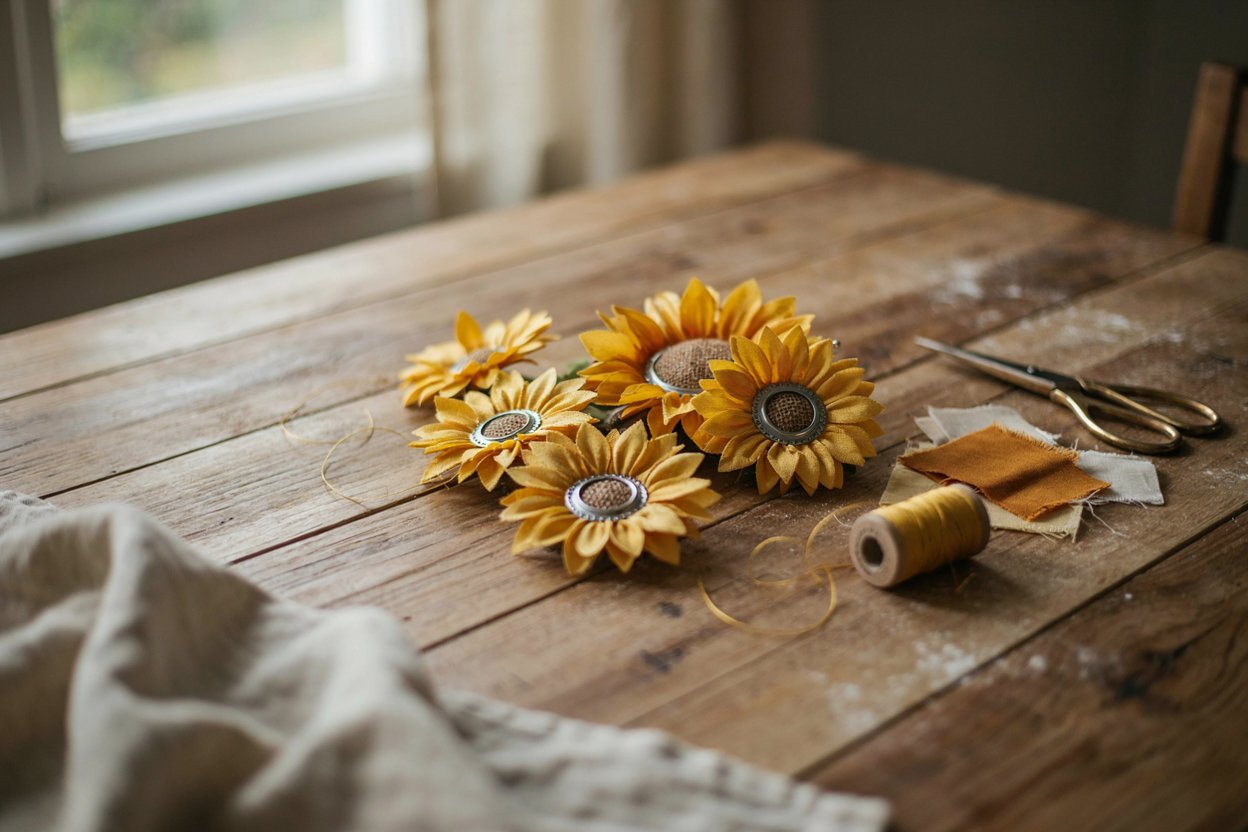
Canning ring rag sunflowers are one of those simple farmhouse crafts that can turn leftover fabric and an old canning ring into something surprisingly pretty. I love crafts like this because they do not require expensive supplies or complicated techniques, and the finished flowers have so much character.
The fabric petals give each sunflower a soft, slightly rustic look, while the canning ring creates a sturdy center that helps everything hold its shape. I have found that this project is especially useful when I have fabric scraps that are too small for another sewing project but too nice to throw away.
You can make these sunflowers in different colors and patterns, use several together for a larger arrangement, or attach one to a wreath, basket, sign, or seasonal decoration. In this tutorial, I will walk you through the materials, preparation, construction, and finishing details so you can make your own without needing advanced crafting skills.
What Are Canning Ring Rag Sunflowers?
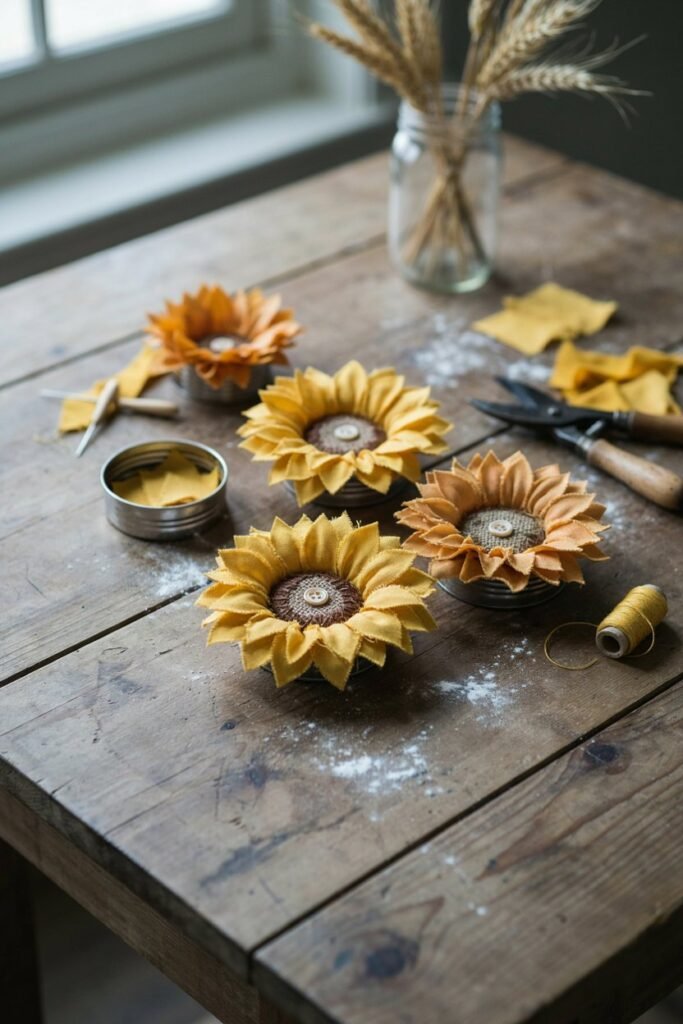
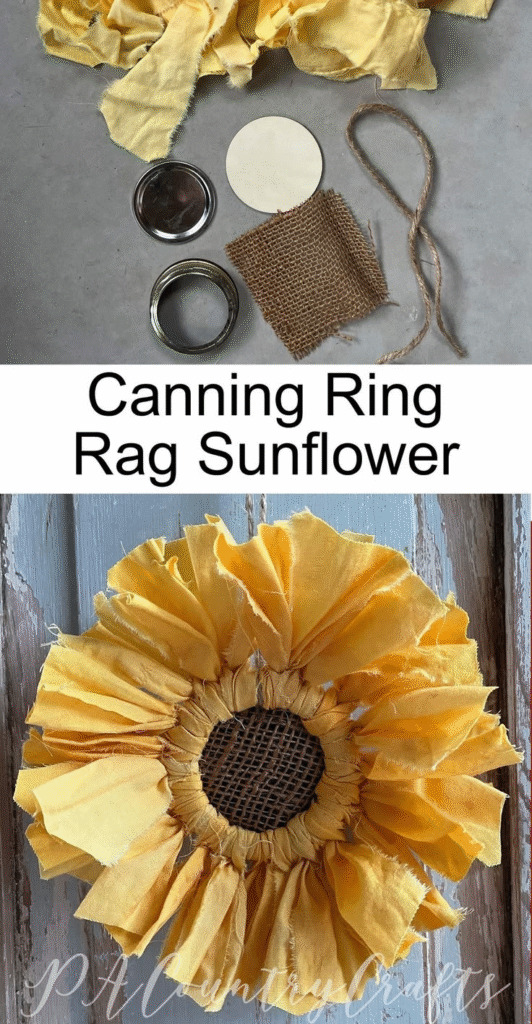
Canning ring rag sunflowers are handmade decorative flowers created by using a canning jar ring as the foundation and fabric scraps to form the petals. The ring gives the flower a defined circular shape, while strips or pieces of fabric are folded, wrapped, or attached around it to create the sunflower petals.
The beauty of this craft is that the finished flower does not need to look perfectly symmetrical. In fact, I think the slightly uneven petals are part of what makes rag sunflowers so charming.
The project also gives you plenty of room to personalize the finished piece. You can use traditional yellow and brown fabric for a sunflower inspired by the real flower, or choose cream, orange, burgundy, blue, or patterned fabric for something that works with your existing home decor.
Why I Love This Simple Fabric Craft
I enjoy projects that make use of things I already have around the house, and this one fits that category perfectly.
A spare canning ring becomes the structure of the flower, while fabric scraps become the petals. That makes this a useful project for anyone who enjoys sewing, quilting, farmhouse decorating, or simply keeping craft materials out of the trash.
Another thing I like is how easy it is to change the finished look.
A sunflower made with bright yellow cotton will have a cheerful traditional appearance. A sunflower made with muted fabrics can look much more vintage and farmhouse inspired. You can even mix two coordinating fabrics to give the petals more dimension.
The flowers are also lightweight, which makes them easy to use for wall decor, wreaths, table arrangements, tiered tray decorations, baskets, and seasonal displays.
Supplies You Will Need
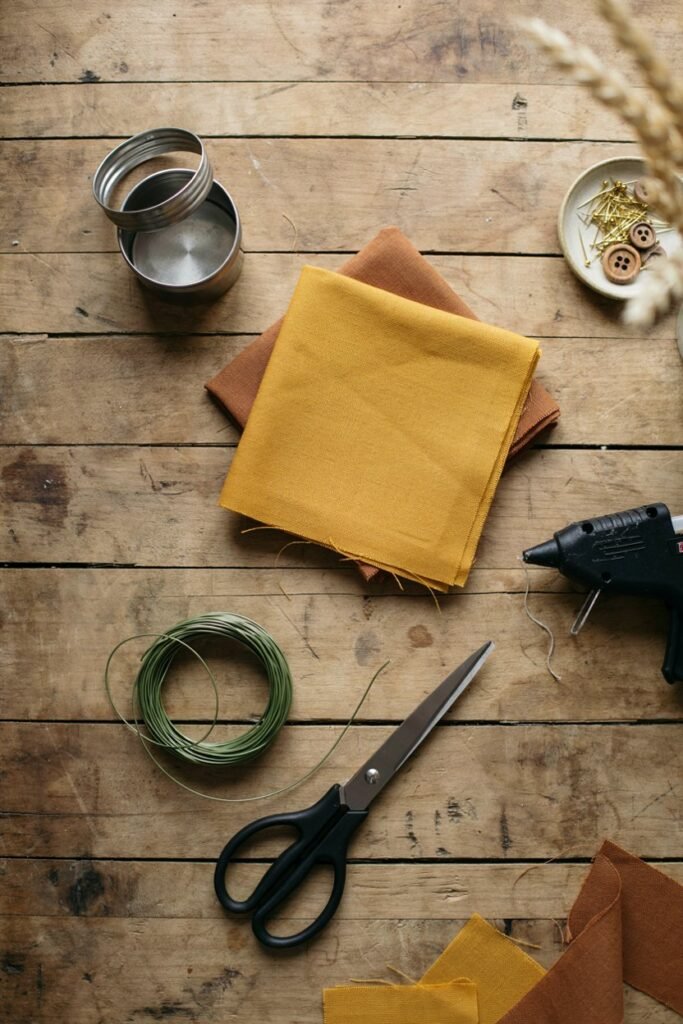
You only need a handful of basic materials to make these rag sunflowers.
Canning Ring
The canning ring provides the foundation for the flower. A standard metal canning ring works well, although you can experiment with different sizes depending on how large you want the finished sunflower to be.
Make sure the ring is clean and dry before starting.
Fabric Scraps
Cotton fabric works especially well because it is easy to cut and manipulate. Yellow, gold, cream, orange, and warm brown fabrics are natural choices for sunflower inspired designs.
You do not have to use one solid color.
Mixing complementary fabrics can make the petals look much more interesting, especially when the flower will be displayed close enough for people to notice the individual pieces.
Scissors
Use a sharp pair of fabric scissors so the pieces are easy to cut.
Sharp scissors also help prevent the fabric edges from becoming unnecessarily ragged while you are preparing the petals.
Hot Glue Gun
A hot glue gun makes this project quick and accessible, especially if you are making several flowers at once.
I recommend having plenty of glue sticks ready before you begin because the petals can take more glue than expected once you start assembling them.
Floral Wire or Craft Wire
Wire can be useful if you want your sunflower to have a stem.
If you are making the flowers specifically for a wreath, wall arrangement, or other flat decoration, you may not need it.
Brown Fabric or Decorative Center Material
The center of the sunflower needs a darker color to create contrast against the petals.
Brown cotton fabric works well, but you can also experiment with burlap, felt, ribbon, buttons, or another textured material depending on the look you want.
Choosing the Right Fabric
Fabric choice makes a bigger difference than you might expect.
For a traditional sunflower, yellow or golden fabric paired with a brown center is the easiest combination. If you are making these for fall decorating, deeper shades such as mustard, rust, burnt orange, and cream can give the flowers a warmer seasonal appearance.
I also like using fabric with a subtle pattern when I want the finished sunflower to look more handmade and less uniform.
Small florals, gingham, stripes, and tiny checks can work particularly well. Large patterns are usually harder to appreciate once the fabric is cut into small petals.
If you are using scraps from other sewing projects, this is also a good opportunity to create flowers that coordinate with the rest of your decor.
Preparing the Fabric
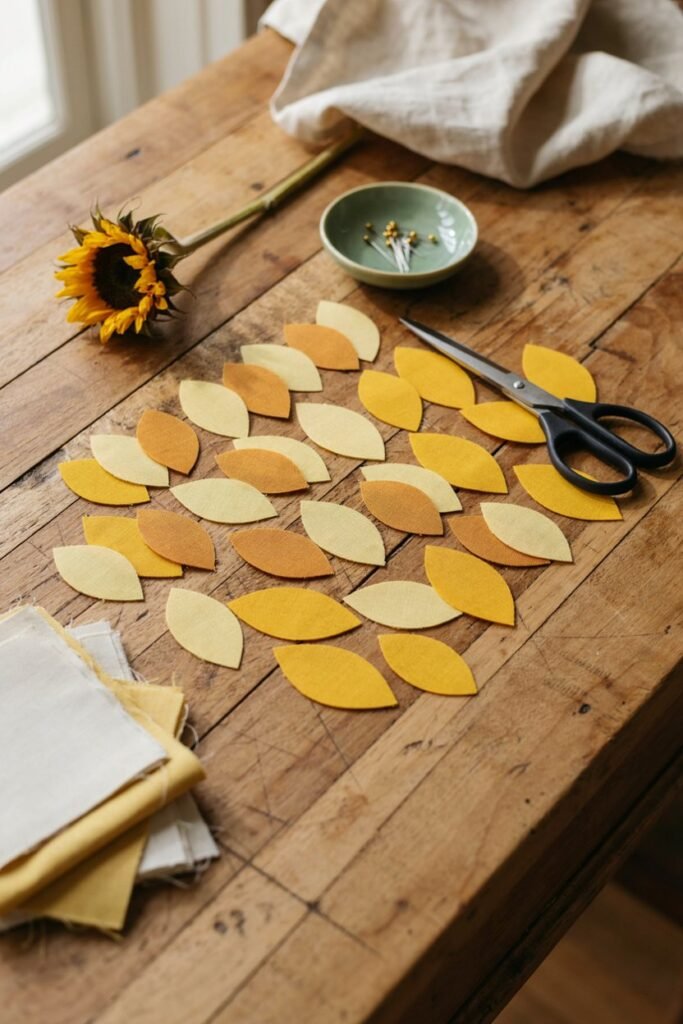
Before assembling the flower, cut your fabric into pieces that are large enough to create the petals without making them difficult to handle.
I recommend preparing more fabric pieces than you think you will need.
It is much easier to have extra petals ready than to stop halfway through the project because you ran out of pieces.
Keep the pieces reasonably consistent in size, but do not worry about making every single one identical. A little variation gives handmade rag flowers a softer and more natural appearance.
If your fabric has visible wrinkles, pressing it before cutting can also make the assembly process easier.
How Many Petals Do You Need?
The exact number depends on the size of your canning ring and how full you want the flower to look.
A smaller number of petals will create a more open flower, while adding additional petals will make the sunflower look fuller and more layered.
When I am making decorative flowers, I prefer to have extra pieces available so I can adjust the fullness as I work instead of deciding on an exact number beforehand.
Lay a few prepared pieces around the canning ring before gluing anything.
This gives you a quick idea of how the finished flower will look and lets you make adjustments before the pieces become permanent.
A Helpful Tip Before You Start
Do a dry layout before reaching for the glue gun.
This small step can save you from having to remove pieces later. Place your fabric petals around the canning ring and check the spacing from different angles.
If one side looks noticeably fuller than the other, adjust the pieces before gluing them down.
I have found that taking a few minutes to arrange everything first makes the final flower look much more balanced.
Once you are happy with the layout, you can begin attaching the petals and building the sunflower.
How to Make Canning Ring Rag Sunflowers
Once the fabric pieces are prepared and you have your canning ring ready, the fun part begins. I like to work slowly during the first few petals because those pieces establish the shape of the entire flower. After the first section is secure, the rest comes together much faster.
Step 1: Arrange Your First Petals
Place your canning ring on a flat work surface.
Take one fabric piece and fold it in the way you have chosen for your petals. Position it along the outside edge of the ring and check how much of the fabric extends outward.
The petals should spread away from the center rather than bunching tightly together.
Add a few more pieces around the ring before gluing them. This helps you see whether the spacing looks even.
I prefer slightly overlapping petals because they give the finished sunflower a fuller appearance and help hide the metal ring underneath.
Step 2: Attach the Fabric Petals
Once you are happy with the arrangement, secure each petal with a small amount of hot glue.
Apply the glue where the fabric meets the canning ring rather than covering the entire piece.
Press the fabric into place carefully and allow the glue to set before moving on to the next petal.
Continue working around the ring.
Try not to use too much glue. Excess glue can make the back of the flower bulky and can also become visible between the petals.
A small amount placed in the right spot is usually enough to hold each piece securely.
Step 3: Build the First Layer
Continue adding petals until you have worked completely around the canning ring.
At this stage, the sunflower may look a little sparse.
Do not worry about that.
The second layer is what gives the flower much of its fullness.
Look at the flower from above rather than only from the side. This makes it easier to spot areas where the petals are too close together or where there is a noticeable gap.
If necessary, gently reposition a petal while the glue is still warm.
Step 4: Add a Second Layer of Petals
For a fuller sunflower, add another set of fabric petals.
Position these pieces slightly inward or between the petals from the first layer.
This creates a layered effect instead of having every petal sitting directly beside another one.
I find that alternating the placement makes a big difference in the finished appearance. The flower begins to look much more dimensional as the layers build up.
You can also make the second layer slightly shorter than the outer layer if you want the center to stand out more.
Step 5: Fluff and Shape the Petals
Once the glue has cooled completely, gently separate the fabric pieces with your fingers.
Spread the petals outward and lift a few of them slightly so the flower does not look completely flat.
This is where you can really personalize the shape.
Some flowers look beautiful with wide, relaxed petals, while others look better with the petals standing slightly upward around the center.
Do not worry about making them perfectly identical.
The small differences are what give handmade fabric flowers their character.
How to Make the Sunflower Center
The center is an important part of this project because it brings the petals together visually and gives the flower its sunflower appearance.
There are several materials you can use depending on the style you want.
Brown Fabric Center
A simple brown fabric center is an easy option.
Cut a small piece of brown fabric and shape it into a circle or another slightly rounded form.
You can add a little texture by gathering or folding the fabric before securing it.
Place the center over the middle of the canning ring and attach it securely with hot glue.
Burlap Center
Burlap gives the sunflower a more rustic farmhouse appearance.
It works especially well when the flower is going to be used on a wreath, wooden sign, basket, or other country style decoration.
Because burlap has a naturally rough texture, you do not need to do much to make it interesting.
A small circular piece secured in the middle can create plenty of visual contrast against softer cotton petals.
Button Center
Buttons are another easy option if you have a collection of craft supplies at home.
A large brown button can create a simple center, while several smaller buttons grouped together can give the flower more texture.
Make sure the button is securely attached if the finished flower will be handled frequently.
Creating a More Textured Center
If you want the sunflower to have more dimension, layer your center materials rather than using one flat piece.
Start with a larger brown circle and add a smaller textured piece on top.
You can use fabric, burlap, felt, ribbon, or another suitable craft material.
The goal is to create enough contrast that the center remains visually distinct from the petals.
I like this approach when making larger sunflowers because a completely flat center can sometimes disappear once the flower is surrounded by lots of fabric.
Adding a Stem
If you want your rag sunflower to look more like a flower that can be placed in a vase, add a stem.
Floral wire or craft wire can work well for this.
Secure the wire firmly to the back of the canning ring or the reinforced center area. Make sure the attachment point is strong enough to support the flower without allowing it to spin around the stem.
You can cover the wire with green floral tape for a more finished appearance.
Another option is to attach the sunflower directly to a wooden dowel or craft stick.
This works particularly well when making several flowers for a decorative arrangement.
How to Make the Sunflower Fuller
If your finished sunflower looks flatter than you expected, you can add another layer of petals instead of starting over.
Add a few pieces between the existing petals and secure them toward the center.
You can also gently bend the fabric outward to create more separation.
The important thing is to build fullness gradually.
Adding too many pieces at once can make the flower look crowded, while adding a few at a time gives you more control over the final shape.
How to Keep the Back Neat
The back of the flower may not be visible when it is displayed, but keeping it reasonably tidy makes the craft easier to use later.
Trim away loose threads and remove long glue strings once the glue has cooled.
If you are attaching the flower to a wreath or another project, leave enough clear space on the back for your attachment method.
A clean back also makes it easier to store the flowers without them catching on other decorations.
Common Mistakes to Avoid
One of the easiest mistakes is using too much glue.
Large amounts of glue can make the flower stiff and heavy, and they can create visible lumps between the fabric pieces.
Another mistake is making every petal face exactly the same direction.
A little variation creates a more natural flower shape.
It is also worth avoiding fabric that is extremely thin unless you are intentionally going for a delicate look. Very thin fabric may not hold the shape as well as a medium weight cotton.
Finally, do not rush the center.
The center is what pulls the entire design together, so take a moment to check the flower from different angles before securing it permanently.
Ways to Use Canning Ring Rag Sunflowers
Once your sunflower is finished, you have plenty of options for displaying it. This is one of the reasons I enjoy making fabric flowers because the same basic project can become several completely different decorations.
Add Them to a Wreath
Rag sunflowers look beautiful attached to a grapevine, fabric, or seasonal wreath.
You can make one large sunflower the focal point or group several smaller flowers together.
For a fuller wreath, combine the sunflowers with greenery, burlap ribbon, fabric leaves, or other seasonal elements.
Make sure the flowers are attached firmly, especially if the wreath will hang on an exterior door.
Create a Table Arrangement
Several flowers attached to craft sticks or wooden dowels can be arranged in a vase for a simple centerpiece.
Try combining different shades of yellow and gold rather than making every flower exactly the same.
Adding greenery between the flowers can also help fill empty spaces and make the arrangement look more complete.
Decorate a Basket
A fabric sunflower can instantly dress up a plain basket.
Attach one flower to the front of a storage basket, gift basket, or decorative container using a strong adhesive or another suitable attachment method.
This works particularly well when the fabric colors coordinate with the room.
Make a Farmhouse Style Wall Decoration
If you enjoy farmhouse or rustic decorating, attach several sunflowers to a wooden sign or neutral wall hanging.
You can combine them with natural textures such as burlap, wood, cotton fabric, and twine.
Keeping the color palette simple can make the finished decoration look intentional rather than overcrowded.
Use Them for Seasonal Decorating
Traditional yellow sunflowers work especially well for late summer and fall decorating.
For a more autumn inspired arrangement, use mustard, rust, orange, cream, and brown fabrics.
The same basic craft can also be adapted for other seasons by changing the fabric colors and patterns.
How to Make Different Sizes
You do not have to make every sunflower the same size.
Use smaller canning rings when you want little flowers for wreaths, baskets, or small decorative projects.
Larger rings can create a bigger statement flower for a wall arrangement or centerpiece.
Another way to change the size is by adjusting the length of the fabric pieces.
Longer pieces will create longer petals, while shorter pieces can give the flower a compact appearance.
If you are making a group of flowers, mixing sizes can make the arrangement look much more natural.
Try Mixing Fabric Patterns
Solid yellow fabric is an obvious choice, but patterned fabrics can make these flowers much more interesting.
Gingham can give the sunflower a country inspired appearance.
Small floral prints can create a softer vintage look.
Neutral fabrics such as cream, beige, and tan can be mixed with yellow for a muted farmhouse style.
You can also use scraps from old sewing projects so the finished flowers coordinate with other handmade pieces in your home.
How to Make the Petals Look More Natural
Perfectly arranged petals can sometimes make a handmade flower look too rigid.
After the glue has cooled, gently spread the petals apart.
Bend a few slightly upward and allow others to sit flatter.
You can also vary the spacing between individual petals.
I find that this small amount of variation makes a big difference because the flower begins to look more relaxed and dimensional.
The goal is not perfection.
You want the finished sunflower to look handmade while still having enough structure to hold its shape.
What to Do If a Petal Comes Loose
If a petal becomes loose after the flower is finished, there is usually no reason to remake the entire sunflower.
Remove any old loose glue if possible and apply a small amount of fresh hot glue to the attachment point.
Press the fabric back into place and allow it to cool completely.
If several petals keep coming loose, check whether the fabric is too heavy for the amount of adhesive being used.
You may need to reinforce the attachment points rather than simply adding more glue everywhere.
How to Store Your Finished Sunflowers
Proper storage can help handmade fabric flowers last from one season to the next.
Keep them somewhere dry and avoid placing heavy decorations on top of them.
A shallow storage container works well because it allows the petals to remain relatively undisturbed.
If the petals become flattened during storage, gently reshape them before displaying the flowers again.
Avoid crushing the centers because repairing a damaged center can be more difficult than reshaping the fabric petals.
Tips for Making Several Sunflowers at Once
If you are planning a wreath or larger decoration, making multiple flowers in one session can save time.
Prepare all of your fabric pieces before turning on the glue gun.
Then arrange your canning rings and work through the flowers one after another.
I also like sorting my fabric pieces by color before starting. It makes it easier to create coordinated flowers without constantly stopping to search through scraps.
For a larger project, make one sunflower completely before producing the rest.
That gives you a finished example to use as a reference for the remaining flowers.
Can I Use Fabric Scraps for This Project?
Yes. Fabric scraps are one of the best reasons to make this craft.
Small pieces that would normally be difficult to use can become individual petals.
Try to choose fabrics with similar weights when possible so the flowers remain relatively consistent.
If you are combining several different fabrics, check the colors together before cutting everything.
A quick layout on the table can help you decide whether the combination works.
Can I Make These Sunflowers Without Sewing?
Yes.
This project can be made without a sewing machine because the fabric pieces can be secured with craft adhesive or hot glue.
That makes it particularly approachable for beginners who enjoy fabric crafts but do not sew.
If you prefer a more finished edge, you can sew or otherwise prepare the fabric pieces before assembling the flower, but it is not essential for a decorative project.
Can I Wash Canning Ring Rag Sunflowers?
I would avoid soaking or machine washing the finished flowers.
The adhesive and metal components are not designed for repeated exposure to water, and the fabric petals can lose their shape.
If your sunflower becomes dusty, gently clean the surface with a soft, dry cloth or another method appropriate for the specific fabric you used.
Can I Use Different Types of Canning Rings?
Yes.
Different ring sizes can be used to create different flower sizes.
Just remember that changing the size of the ring will also affect how many petals you need and how large the fabric pieces should be.
It is worth making one small test flower before cutting a large amount of fabric if you are experimenting with an unfamiliar ring size.
How Long Do Canning Ring Rag Sunflowers Take to Make?
The time depends on the size of the flower, the number of petals, and how detailed you want the center to be.
A simple sunflower can come together fairly quickly once your fabric pieces are prepared.
Making several flowers will take longer, but preparing all of the fabric pieces beforehand can make the process much more efficient.
Final Thoughts
Canning ring rag sunflowers are a simple way to turn everyday materials and leftover fabric into handmade home decor.
What I especially like about this project is how easy it is to make the finished flowers your own. You can change the fabric, size, center, colors, and display method without changing the basic idea.
Start with one sunflower and use it as your pattern for the rest. Once you see how the fabric behaves around the canning ring, you can adjust the petal size and fullness to create exactly the look you want.
Whether you use the finished flowers on a wreath, in a vase, on a basket, or as part of a seasonal display, these little handmade sunflowers can add a warm and personal touch to your decor.