Fall Camping Packing List for the USA: 35 Essentials You Will Be Glad You Packed
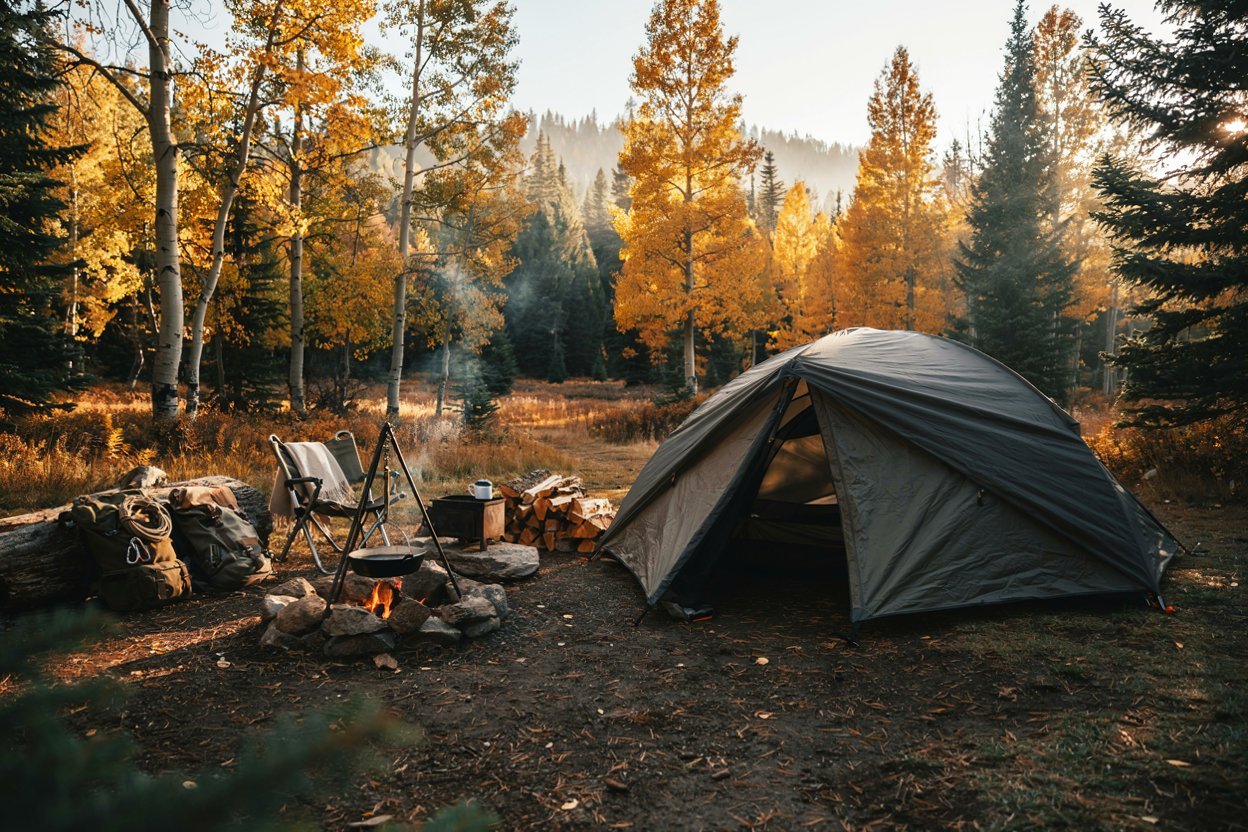
Fall camping is one of my favorite ways to spend time outdoors because the cooler air makes long days outside much more comfortable. But packing for an autumn camping trip has taught me that cooler weather can also be surprisingly unpredictable.
I have had camping days that started with warm sunshine and ended with a very cold evening, damp grass, strong wind, and temperatures that dropped much faster than expected.
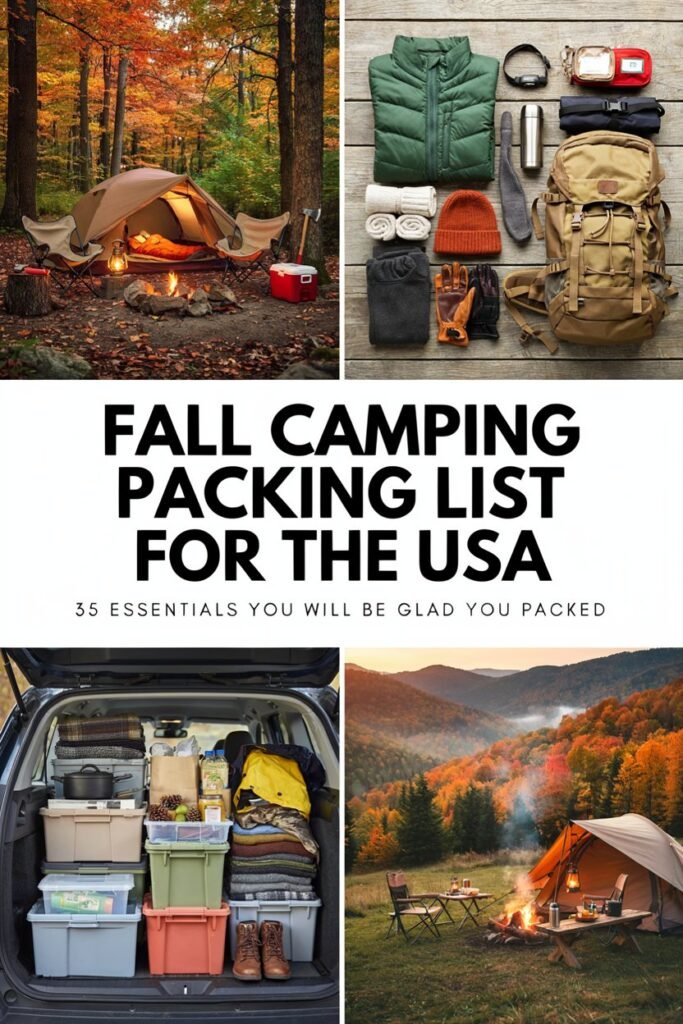
That is why I no longer pack for fall camping based only on the daytime forecast. I think about the entire trip, from setting up camp in the afternoon to getting dressed on a chilly morning.
In this fall camping packing list, I am sharing the essentials I personally consider before heading out, along with practical tips that can help you stay warm, dry, comfortable, and prepared. I will also explain how I adjust my packing depending on the location, weather, and length of the trip.
Disclaimer
This post may contain affiliate links. As an Amazon Associate, I earn from qualifying purchases at no additional cost to you. I only recommend camping gear that I genuinely find useful for fall trips. Weather, campsite conditions, fire restrictions, and park rules can vary, so always check current local conditions and regulations before heading out.
Amazon Shopping List You Need
- Coleman Sundome Camping Tent – I use a reliable tent with good weather protection for cool fall nights.
- TETON Sports Sleeping Bag – I always pack a warm sleeping bag when temperatures can drop after sunset.
- Therm-a-Rest Sleeping Pad – I use a comfortable sleeping pad for extra insulation and a better night’s sleep.
- Black Diamond Headlamp – I always keep a headlamp handy for setting up camp and moving around after dark.
- Coleman Portable Camping Stove – I use this for making warm meals and hot drinks at camp.
- Hydro Flask Insulated Water Bottle – I love having one to keep drinks at a comfortable temperature during chilly hikes.
- NOCO Portable Power Bank – I always bring backup power for keeping my phone and other small devices charged.
Why Fall Camping Requires More Planning
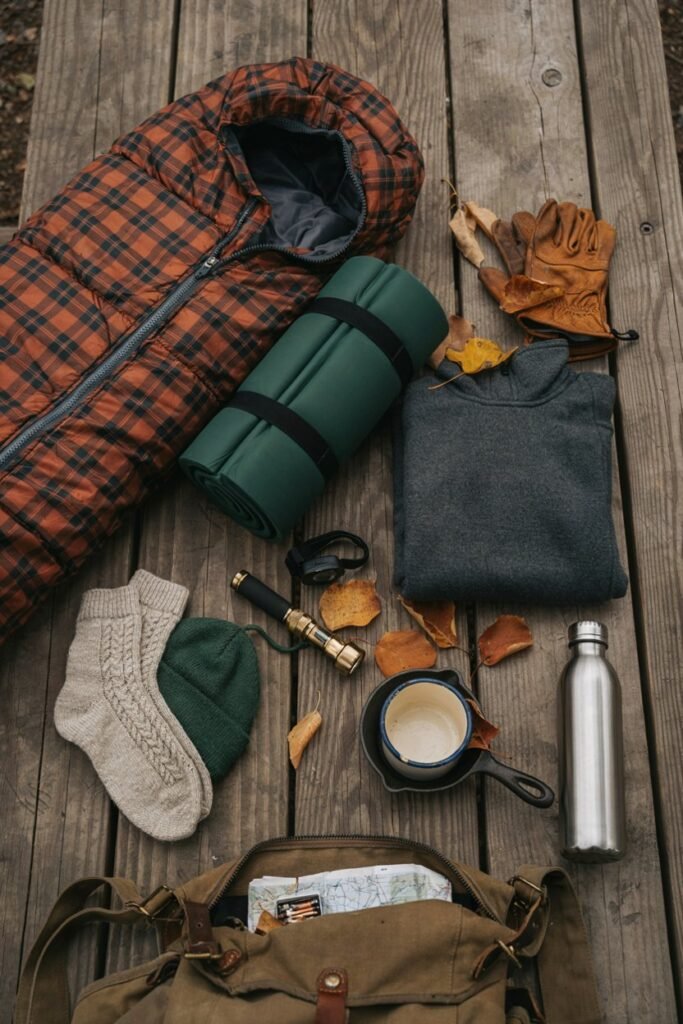
Fall weather can change quickly, and that is one of the biggest things I consider before packing the car. A comfortable afternoon does not necessarily mean a comfortable night. Temperatures can fall considerably after sunset, especially when camping in mountains, forests, or areas with higher elevations.
I also pay much more attention to rain during fall trips. Wet clothing, damp sleeping gear, and a muddy campsite can make an otherwise beautiful weekend much less enjoyable.
For me, the best approach is to prepare for several conditions instead of packing for one perfect weather forecast.
1. A Reliable Tent
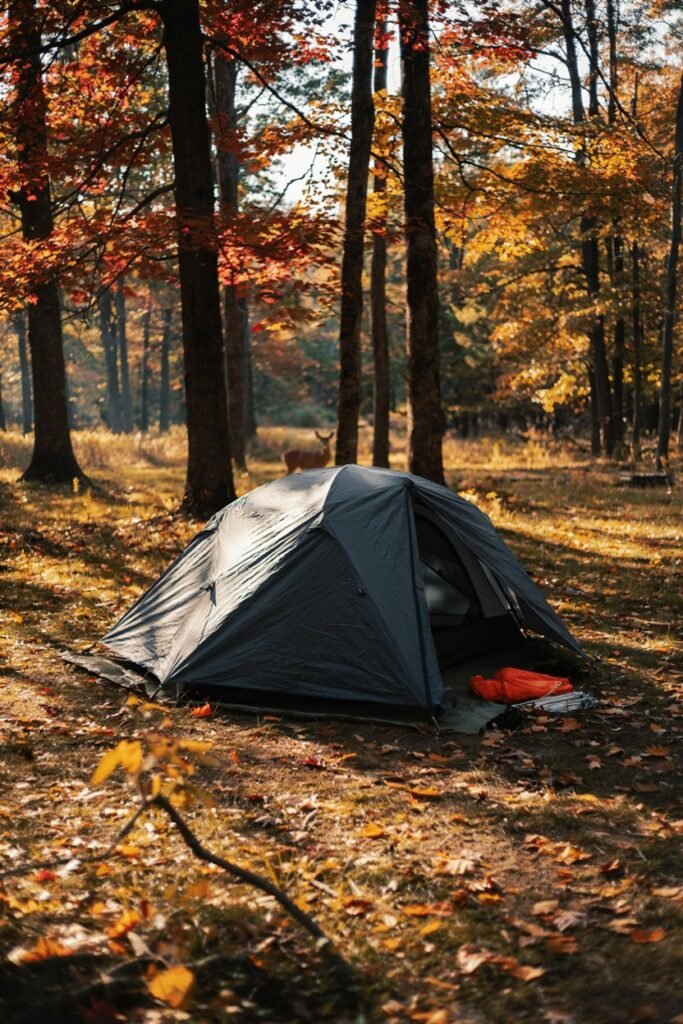
Your tent is one of the most important pieces of fall camping gear because it becomes your protection from wind, rain, cold air, and damp ground.
I prefer a tent with a dependable rainfly, good ventilation, sturdy stakes, and enough interior space to keep my sleeping gear and a few personal items organized. Ventilation is particularly important because condensation can become a problem when temperatures drop at night.
Before leaving home, I always check the tent, poles, stakes, and rainfly rather than assuming everything is ready from the last trip. Finding a missing tent stake when you are already at the campground is not how I like to start a camping weekend.
If rain is in the forecast, I also make sure I know exactly how the rainfly attaches before arriving at the campsite. Setting it up calmly at home is much easier than trying to figure it out in the dark or during a downpour.
2. Tent Footprint
A tent footprint is another item I like to have with me during fall camping.
The ground can become wet and muddy during autumn, especially after overnight rain. A footprint provides an additional layer between the tent floor and the ground while helping protect the bottom of the tent from moisture, dirt, and rough surfaces.
If you do not have a dedicated footprint, make sure any alternative you use does not extend beyond the edges of the tent. Water can collect on an exposed piece of material and run underneath your tent.
3. Extra Tent Stakes
I used to think a few tent stakes were enough until I realized how easy it is to lose one, bend one, or discover that the ground at a campsite is harder than expected.
I now prefer to bring several extra stakes.
They take up very little space, but they can be extremely useful when dealing with wind, uneven ground, or a damaged stake. I also keep them somewhere easy to reach instead of burying them underneath the rest of my camping equipment.
4. Tarp for Extra Protection
A tarp can be surprisingly useful during a fall camping trip.
I like having one available because it can provide extra protection from rain, create a dry area for gear, or give you a more comfortable place to organize equipment around camp.
You do not necessarily need to build a complicated shelter. Sometimes having a simple covered area where you can take off wet shoes, prepare food, or keep bags away from damp ground makes a big difference.
Just make sure your tarp setup is secure and appropriate for the campground rules and weather conditions.
5. Cold Weather Sleeping Bag
This is one item I would never cut corners on when packing for fall camping.
A sleeping bag that feels comfortable during the afternoon does not necessarily provide enough warmth once temperatures fall overnight. I always check the expected nighttime temperature before choosing my sleeping bag and give myself some extra margin when the weather is uncertain.
Pay attention to the temperature ratings rather than choosing a sleeping bag based only on appearance. The right sleeping bag depends on the conditions, your personal comfort level, and the rest of your sleeping system.
I would much rather have a little extra warmth available than spend half the night wishing I had packed something warmer.
6. Insulated Sleeping Pad
A warm sleeping bag is important, but the sleeping pad underneath you is just as important.
The cold ground can make a campsite feel much colder than the air temperature suggests. A properly insulated sleeping pad creates a barrier between your body and the ground while also making sleeping much more comfortable.
This is one of those pieces of camping equipment that beginners sometimes overlook. I learned that comfort at night depends on the entire sleeping setup, not just the sleeping bag.
For fall trips, I pay attention to the insulation of the sleeping pad rather than choosing one simply because it is lightweight or inexpensive.
7. Extra Blanket
I always like having an extra blanket available during fall camping.
Even when I do not need it inside the tent, it can be useful around the campsite when the temperature drops in the evening. It is also nice to have something warm to wrap around yourself while sitting outside, drinking coffee, or talking around the campsite.
An extra blanket does not have to be complicated. A compact fleece blanket can provide a useful additional layer without taking up too much room in the car.
8. Warm Sleeping Clothes
I do not like getting into my sleeping bag wearing damp clothes from the day.
For fall camping, I pack a clean set of sleeping clothes and keep them dry until bedtime. Warm socks, comfortable pants, and a dry long sleeve top can make a noticeable difference when the temperature drops.
I also make sure these clothes stay inside the tent or a waterproof bag rather than leaving them exposed around the campsite.
Keeping one dry outfit reserved for nighttime is one of the simplest habits that has made my camping trips more comfortable.
9. Warm Base Layers
Layering is one of the easiest ways to deal with changing fall temperatures.
A lightweight base layer can help keep you comfortable during chilly mornings without forcing you to wear a heavy jacket all day. I like being able to add or remove layers as the temperature changes rather than relying on one thick piece of clothing.
For a fall camping trip, I usually think in three basic layers: a comfortable base layer, an insulating middle layer, and an outer layer that can protect me from wind or rain.
This approach gives me much more flexibility when the weather changes throughout the day.
10. Fleece or Insulated Jacket
A warm middle layer is one of the first clothing items I pack for autumn camping.
Fleece works well for cool mornings and evenings, while an insulated jacket can provide additional warmth when temperatures become much colder.
I prefer clothing that is easy to layer rather than bringing one extremely heavy jacket. During the warmer part of the afternoon, I can remove the extra layer and put it back on once the sun goes down.
That flexibility is especially helpful when camping in places where temperatures change considerably between afternoon and nighttime.
11. Waterproof Rain Jacket
A waterproof jacket is one of the items I always want within easy reach when I am camping in the fall. I have learned that checking the weather before leaving home is helpful, but it is not enough to assume the forecast will stay exactly the same throughout the trip.
A lightweight waterproof jacket can protect you from unexpected rain without taking up much room in your camping bag. I also like having one that can fit comfortably over a fleece or other warm layer.
I keep my rain jacket somewhere accessible rather than packed underneath everything else. If a shower starts while I am setting up camp, I do not want to empty the entire car just to find it.
12. Warm Camping Socks
Cold feet can make an otherwise comfortable camping night miserable, which is why I always pack more socks than I think I will need.
For fall camping, I prefer warm hiking or wool socks that provide insulation while managing moisture. I also bring an extra pair specifically for sleeping.
One habit that has made a noticeable difference for me is keeping my clean nighttime socks separate from the socks I wear around camp. Once the evening gets cold, putting on a completely dry pair feels much better than trying to sleep in socks that have been exposed to damp grass or morning moisture.
13. Beanie or Warm Hat
A warm hat takes almost no room in a camping bag, so I never see much reason to leave one behind during a fall trip.
Mornings can feel much colder than expected, especially when there is a breeze. A comfortable beanie can help make those early hours outside much more enjoyable while you prepare breakfast or start packing up camp.
I usually keep mine in a jacket pocket or near my sleeping gear so I can grab it without searching through several bags.
14. Lightweight Gloves
Gloves are another small item that can become very useful when temperatures drop.
You may not need them during the afternoon, but setting up a tent early in the morning or preparing breakfast with cold hands is not particularly comfortable.
I prefer lightweight gloves that are easy to store and do not interfere too much with normal tasks. If the forecast calls for genuinely cold conditions, I would choose a warmer pair rather than relying on thin gloves alone.
15. Extra Clothing
One of the biggest mistakes I see people make with camping is packing clothing based only on the number of days they will be away.
Fall weather makes extra clothing even more important because rain, mud, sweat, and damp conditions can quickly make an outfit unsuitable.
I always like having at least one complete backup outfit, including socks and underwear. I keep that outfit protected in a waterproof bag so it stays dry even if other items become wet.
Having dry clothes available can completely change how you feel about a rainy camping trip.
16. Waterproof Storage Bags
Keeping your clothing and important personal items dry should be a priority during fall camping.
I like using waterproof or water resistant bags for clothing, electronics, documents, and other items that I cannot afford to have soaked.
You do not necessarily need a separate expensive bag for every item. The important thing is to have a reliable way to separate dry essentials from wet gear.
I also avoid leaving clothing bags directly on the ground outside the tent, even when the weather looks clear.
17. Headlamp
A headlamp is one of the most useful pieces of camping gear I pack.
A regular flashlight works, but a headlamp leaves both hands free. That makes a huge difference when you are setting up your tent, cooking dinner, walking around the campsite, or searching through your gear after sunset.
Fall also means shorter daylight hours, so I find lighting even more important than during summer camping.
I keep my headlamp somewhere that I can reach quickly rather than leaving it buried in my backpack.
18. Extra Batteries
Whenever I pack lighting equipment, I also pack extra batteries if the equipment requires them.
This is one of those small details that is easy to forget because everything may be working perfectly when you leave home.
I check the batteries before the trip and keep spares with my camping supplies. I would rather carry a few extra batteries than discover after dark that my flashlight or lantern is almost empty.
If your lighting equipment uses rechargeable batteries, I still recommend bringing a reliable backup power source.
19. Camping Lantern
A headlamp is excellent for moving around, but a lantern is useful when you want to illuminate the entire campsite.
I like having one around the cooking area or inside the tent vestibule when organizing gear in the evening.
A lantern also makes the campsite feel more comfortable once the sun goes down. Since fall evenings arrive earlier, dependable lighting becomes part of my normal camping setup rather than something I only bring as an emergency item.
20. Portable Power Bank
I always like having a portable power bank available when camping, particularly when I am traveling somewhere unfamiliar.
It can keep a phone charged for navigation, weather updates, emergency communication, photos, and other important tasks.
I do not rely on my phone for every part of a camping trip, but I want it available if I genuinely need it.
Before leaving home, I make sure the power bank is fully charged and that I have the correct charging cable with it.
21. Camping Stove
A camping stove makes preparing meals much easier, particularly when the weather is cold or wet.
While cooking over a campfire can be enjoyable, I do not want my entire meal plan to depend on having a suitable fire. A stove gives me another reliable way to prepare breakfast, coffee, lunch, or dinner.
Before every trip, I check the stove and make sure I have enough fuel for the meals I plan to prepare.
Always use camping stoves according to the manufacturer’s instructions and campground rules, and never use fuel burning cooking equipment inside an enclosed tent.
22. Fuel and Fire Starter
Having the stove is only useful if you have the fuel required to operate it.
I keep fuel on my camping checklist because it is surprisingly easy to remember the stove and forget what makes it work.
I also bring a reliable fire starter when campfires are permitted. Waterproof matches, a lighter, or another appropriate fire starting method can be useful when conditions are damp.
Before starting any fire, I check the campground rules and current fire restrictions. Restrictions can change depending on local weather and wildfire conditions.
23. Camping Cookware
I prefer keeping my camping cookware simple.
A pot, pan, cooking utensil, knife, cutting board, and a few basic serving items can handle most meals without filling the entire car with kitchen equipment.
For fall camping, I especially like meals that can be prepared in one pot because they are warm, filling, and easier to clean up afterward.
I also keep the cooking equipment together in one container. That makes setting up the kitchen much faster once I arrive at the campsite.
24. Water Bottles and Extra Water
I never like assuming that water will be as convenient as it is at home.
Before leaving, I check whether the campground provides potable water and whether I need to bring my own supply.
Reusable water bottles are useful throughout the day, while additional containers can provide backup water for cooking and cleaning.
If I am camping somewhere where reliable water access is uncertain, I plan ahead with enough water for drinking, cooking, and basic needs rather than waiting until I arrive to figure it out.
25. Cooler and Food Storage
A cooler is useful for keeping perishable food and drinks at a safe temperature during a camping trip.
I try to organize the cooler before leaving home so that the foods I will use first are easy to reach. This saves time and helps prevent everything from being taken out repeatedly.
I also think about food storage beyond the cooler. Depending on where I am camping, food and scented items may need to be stored securely according to local regulations and wildlife safety guidance.
Keeping the campsite clean is part of being a responsible camper.
26. Easy Fall Camping Meals
Fall is one of my favorite times to make warm camping meals.
Simple foods such as chili, soup, oatmeal, pasta, breakfast burritos, and foil packet meals work well because they are filling and do not require complicated preparation.
I also like having easy snacks available for the afternoon because hiking and setting up camp can make everyone hungry sooner than expected.
Coffee, tea, or hot chocolate can also be especially enjoyable on a cold morning.
My main goal is to prepare meals that are satisfying without creating a huge pile of dishes at the end of the night.
27. First Aid Kit
A first aid kit belongs in every camping setup, even when the trip is only for a weekend.
It should be suitable for basic problems such as small cuts, blisters, minor scrapes, and other common outdoor mishaps.
I also make sure everyone knows where the first aid kit is located. There is little benefit in having one if it is buried underneath several bags when someone needs it.
For longer or more remote trips, I adjust the contents according to the location, activities, group size, and distance from medical services.
28. Sunscreen and Lip Balm
Cool weather can make people forget about sun protection, but fall does not mean you are protected from the sun.
I continue using sunscreen during outdoor trips and keep lip balm with me because cool, dry, and windy conditions can leave lips uncomfortable surprisingly quickly.
This is especially important when spending several hours hiking or sitting outside.
29. Insect Repellent
I do not automatically leave insect repellent at home just because summer has ended.
The number of insects can vary considerably depending on the location, weather, and time of year.
I check the conditions for the campground I am visiting and pack appropriate protection when necessary.
It is a small item, so I would rather have it available than spend the evening wishing I had brought some.
30. Toilet Paper and Personal Hygiene Supplies
Personal hygiene items are easy to overlook when you are focused on tents, sleeping bags, and cooking equipment.
I keep a small personal hygiene bag containing the basics I need for the trip, along with toilet paper stored in a waterproof bag.
Depending on the campground, I may also bring hand sanitizer, biodegradable soap where appropriate, a toothbrush, toothpaste, wet wipes, and a small towel.
I try to pack these items together so they are easy to find when needed.
31. Trash Bags
Trash bags take up almost no space, but they are one of the items I consider essential.
I use them for food packaging, general campsite waste, dirty clothing, and wet items that need to be separated from everything else.
I always try to leave the campsite as clean as I found it. Keeping a few extra trash bags in the car is useful because they can serve several purposes during the trip.
32. Camp Chairs
A comfortable chair can make a surprisingly big difference after a long day outdoors.
Once the tent is set up and dinner is finished, having somewhere comfortable to sit makes it easier to actually enjoy the campsite instead of constantly standing or sitting on the ground.
For fall camping, I particularly enjoy having a chair available in the evening when temperatures begin to fall and everyone gathers around the campsite.
33. Camping Table
A small camping table is not essential for every trip, but I find it very useful when preparing meals and organizing equipment.
It gives you a clean surface for cooking, preparing drinks, storing utensils, and keeping food away from the ground.
If I am trying to keep the setup minimal, I can manage without one. For family camping or longer trips, however, the extra workspace is often worth bringing.
34. Emergency Blanket
An emergency blanket is lightweight, compact, and easy to store.
I keep one in my emergency supplies because it can provide an additional layer of insulation if an unexpected situation occurs.
Hopefully you will never need it, but emergency equipment is supposed to be there before you need it rather than after something goes wrong.
35. Offline Maps and Navigation Backup
I do not like relying entirely on a phone signal when traveling to unfamiliar camping areas.
Before leaving, I download maps or make sure I have another reliable way to navigate if cellular service becomes unavailable.
I also make a note of the campground location, nearby roads, and important local information before the trip.
Having navigation available offline gives me more confidence when exploring areas where phone service may be limited.
How I Adjust My Packing for Different Fall Camping Conditions
One thing I have learned from planning fall camping trips is that there is no single packing list that works perfectly for every part of the USA. The same October weekend can feel completely different depending on whether you are camping in the mountains, near the coast, in a forest, or somewhere with a dry desert climate.
Before I pack, I look at the expected daytime and nighttime temperatures, the chance of rain, wind conditions, elevation, and how far the campground is from nearby stores or services. Those details help me decide which items are worth giving extra space to in the car.
Mountain Camping
Mountain camping is where I pay the most attention to nighttime temperatures.
Even if the afternoon feels comfortable, temperatures can fall quickly after sunset. I prioritize a warm sleeping bag, an insulated sleeping pad, thermal layers, warm socks, a fleece or insulated jacket, gloves, and a warm hat.
I also make sure my tent is properly secured because wind can become an issue in exposed areas.
For higher elevation trips, I pay close attention to the forecast shortly before leaving because conditions can change much faster than they might at lower elevations.
Forest Camping
Forest camping often means dealing with shade, damp ground, fallen leaves, and changing weather.
I make waterproof storage a priority because I want my clothing and sleeping gear to stay dry even if the ground becomes wet.
A tarp can also be particularly useful in these conditions. I like having one available for creating a dry area around camp or protecting gear from unexpected rain.
Desert Camping
Desert camping can be misleading because warm daytime temperatures do not always mean warm nights.
I make sure I have comfortable clothing for the daytime as well as warm layers for after sunset. I also pay close attention to water because dry environments can make staying hydrated especially important.
For desert trips, I also protect myself from the sun during the day and prepare for the significant temperature difference that can occur between afternoon and nighttime.
Coastal Camping
Coastal camping comes with its own challenges.
Wind, moisture, sand, and changing weather can affect how comfortable your campsite feels. I prefer bringing a dependable outer layer and making sure clothing and electronics are protected from moisture.
I also try to keep sand out of the tent as much as possible because it has a way of getting into everything.
What I Pack for a Family Fall Camping Trip
Packing for a family camping trip requires a little more planning because children can go through clothing and snacks much faster than expected.
I usually think about the things that are most likely to cause problems if they are forgotten.
Extra socks are high on my list because wet or dirty socks can quickly become uncomfortable. I also like having extra layers, additional blankets, easy snacks, warm drinks, headlamps, and comfortable sleeping arrangements.
For younger children, familiar comfort items can also make bedtime easier.
I have found that organizing each person’s clothing separately makes the entire trip easier. Instead of digging through one large bag, everyone can quickly find what they need.
What Beginners Often Forget
Some of the most frustrating camping problems come from small items rather than major pieces of equipment.
These are a few things I always double check before leaving home.
Extra Socks
One wet pair is enough to make you appreciate having another.
Headlamp
A flashlight is helpful, but having both hands free is much better when setting up camp after dark.
Tent Stakes
A missing or damaged stake can make setting up your shelter much more difficult.
Extra Batteries
Lighting equipment is not much use when the batteries are dead.
Trash Bags
You will almost always find a use for a few extra bags.
Toilet Paper
Even if the campground provides facilities, I prefer having my own backup supply.
Warm Layers
The afternoon forecast does not tell you how the campsite will feel at midnight.
Rain Gear
A rain jacket takes little space and can save an uncomfortable day.
Power Bank
A charged phone can be useful for navigation, weather information, and emergencies.
First Aid Kit
Small outdoor injuries are much easier to deal with when basic supplies are close by.
How I Organize Everything in the Car
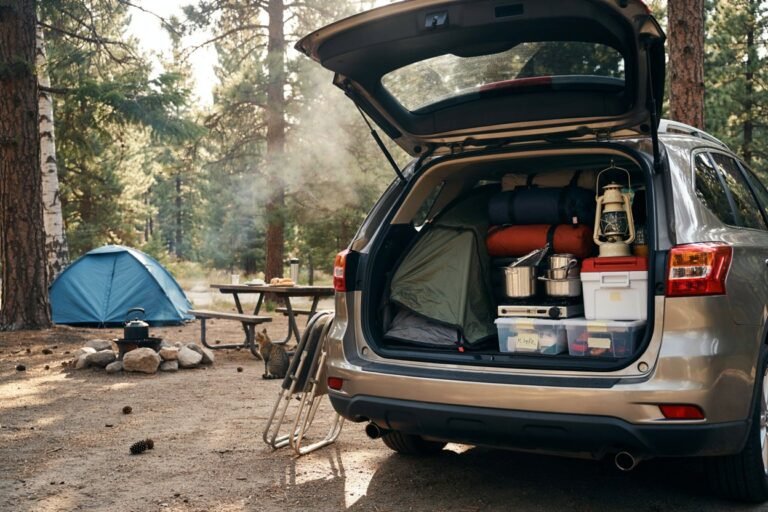
I have found that packing the car properly is almost as important as deciding what to bring.
The things I may need immediately stay near the top or somewhere easy to reach.
My first access group usually includes a jacket, rain gear, water, snacks, first aid supplies, and a headlamp.
Camping equipment such as the tent, stakes, tarp, and sleeping gear stays together so I can start setting up without searching through several bags.
I also keep kitchen supplies together. Having the stove, fuel, cookware, utensils, and food preparation items in one area makes campsite setup much faster.
Emergency supplies should also remain accessible. I would not want to unload half the car before reaching something important.
A Simple Fall Camping Checklist
Shelter
- Tent
- Rainfly
- Tent footprint
- Extra tent stakes
- Tarp
- Waterproof storage bags
Sleeping Gear
- Cold weather sleeping bag
- Insulated sleeping pad
- Camping pillow
- Extra blanket
- Sleeping clothes
- Sleeping bag liner
Clothing
- Base layers
- Long sleeve shirts
- Fleece or insulated jacket
- Waterproof rain jacket
- Hiking pants
- Extra pants
- Warm socks
- Extra socks
- Beanie
- Gloves
- Comfortable camp clothes
- Waterproof footwear
Cooking and Food
- Camping stove
- Fuel
- Lighter
- Fire starter
- Cooking pot
- Pan
- Cooking utensils
- Plates
- Bowls
- Mugs
- Water bottles
- Extra water
- Cooler
- Food storage containers
- Snacks
- Easy camping meals
- Trash bags
Lighting and Electronics
- Headlamp
- Flashlight
- Camping lantern
- Extra batteries
- Portable power bank
- Charging cables
- Offline maps
Safety and Personal Items
- First aid kit
- Emergency blanket
- Sunscreen
- Lip balm
- Insect repellent
- Toilet paper
- Hand sanitizer
- Toothbrush
- Toothpaste
- Personal medications
- Small towel
Campsite Comfort
- Camp chairs
- Camping table
- Extra blanket
- Outdoor mat
- Book or entertainment
- Extra food and water
Before You Leave Home
I like doing one final check before loading the car because it is much easier to solve a missing item at home than at the campground.
I check the weather again, paying particular attention to nighttime temperatures and rain. I make sure my tent and rainfly are complete, my sleeping gear is clean and dry, and my lighting equipment has working batteries or a full charge.
I also check whether the campground has any current restrictions regarding fires, food storage, pets, vehicles, or other activities.
If I am traveling somewhere unfamiliar, I save the directions and important campground information before leaving. I do not like depending entirely on a phone signal once I am already on the road.
Final Thoughts
Fall camping rewards a little extra preparation. The cooler temperatures can make hiking, cooking, sitting around camp, and exploring much more enjoyable, but only if you are prepared for what happens after the sun goes down.
The most important thing is not bringing the largest amount of gear. It is bringing the right gear for the conditions you are actually expecting.
A dependable tent, warm sleeping system, proper layers, waterproof storage, reliable lighting, enough food and water, and a few basic safety supplies can make a huge difference.
I also recommend leaving a little room in your packing plan for the unexpected. Weather can change, clothing can get wet, and a simple camping trip can take longer than planned.
My best advice is to check the forecast, understand the area you are visiting, and pack with the coldest realistic conditions in mind rather than the warmest part of the afternoon.
When you are prepared for the chilly mornings, cold nights, rain, and changing temperatures, you can spend less time worrying about your gear and more time enjoying what makes fall camping so special.