10 interior trends defining homes in 2026
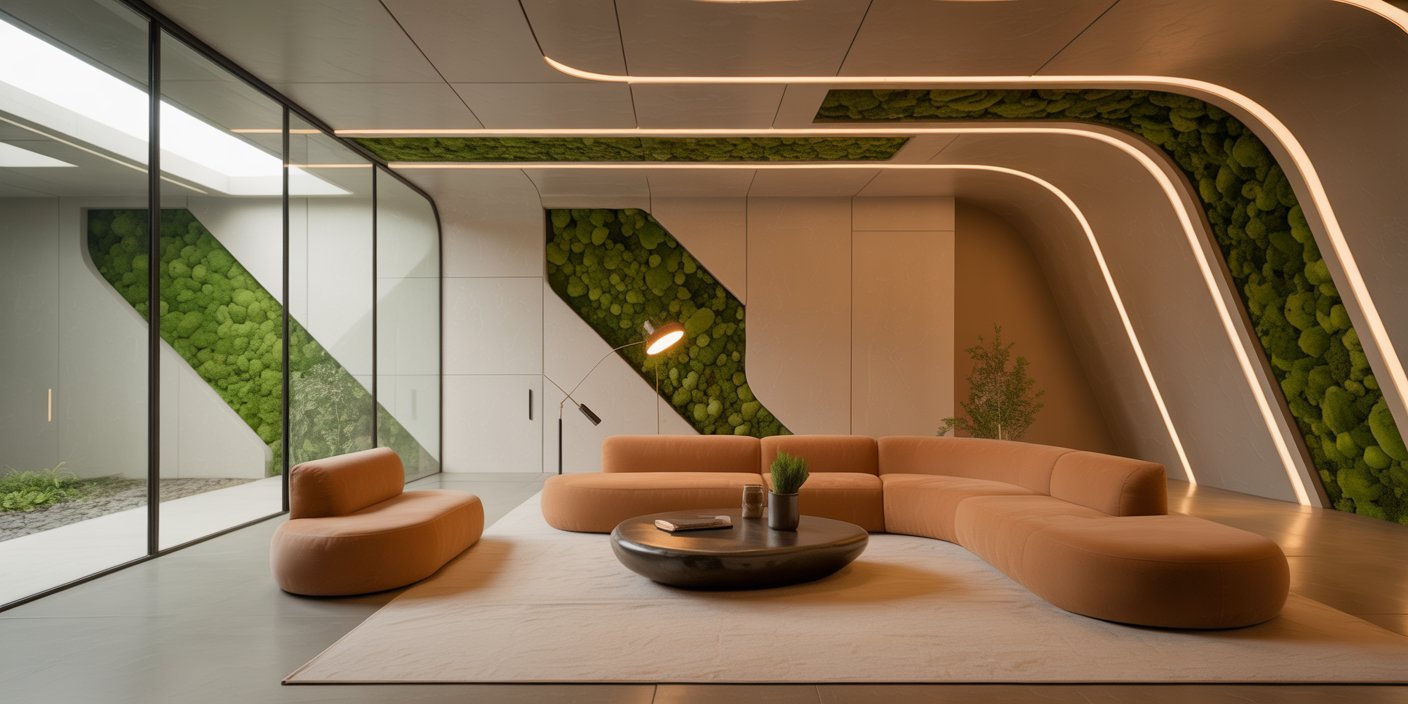
Last weekend, I found myself standing in the middle of our living room with a laundry basket in one hand and my phone in the other, scrolling through home photos while my kids argued over throw pillows and my husband asked if we really needed another plant.
That’s when it hit me.
Most of us don’t redesign our homes because of trends. We do it because life changes. Kids grow. Work moves into the dining room. Guests come over more often.
We get tired of looking at the same wall. Or we simply wake up one morning and want our space to feel lighter, calmer, or more put together.
That’s exactly what 2026 interior trends are about.
They’re not flashy or unrealistic. They’re practical, warm, and built around real living — homes where shoes pile up by the door, snacks live on the counter, and the couch doubles as movie theater, nap station, and family meeting spot.
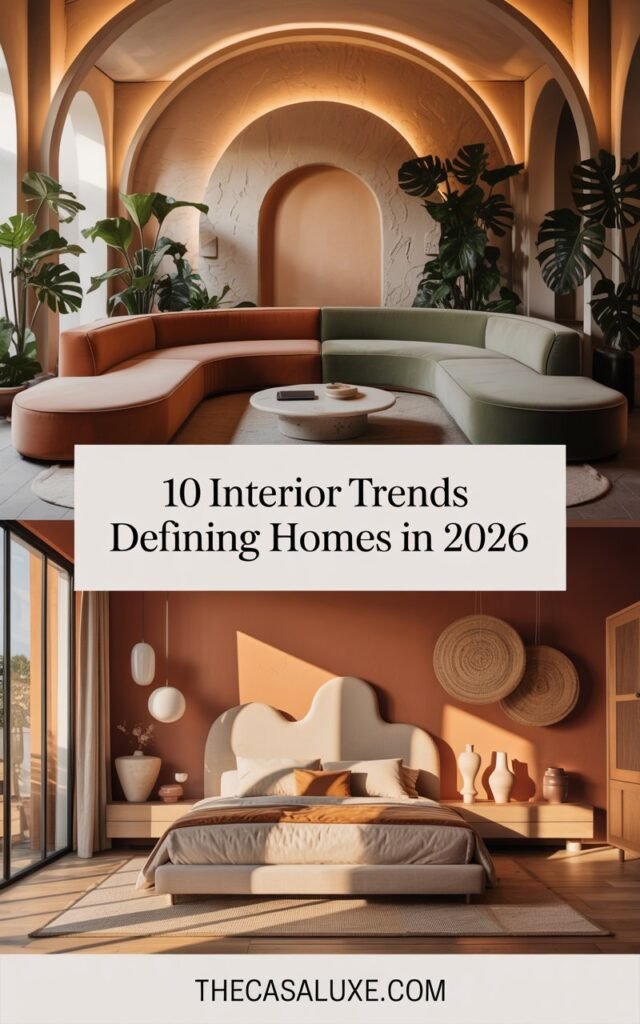
This year’s design ideas focus on comfort, flexibility, personality, and smart choices that don’t require a full renovation.
Think cozy textures that hide fingerprints, colors that relax your nervous system, furniture that actually works for families, and layouts that help small spaces feel bigger.
And the best part? You don’t need a big budget to follow these trends.
Many of them can be added in small ways — swapping lighting, rearranging furniture, adding layered fabrics, or simply decluttering one corner at a time.
So whether you’re styling your first home, refreshing a room between school pickups, or dreaming up changes while folding laundry (like I was), here are 10 interior trends defining homes in 2026 — plus fun, realistic tips to help you bring each one into your own space without stress.
Let’s start.
Disclaimer: This post contains affiliate links. I may earn a small commission if you purchase through these links at no extra cost to you.
Amazon Shopping List: Interior Trends Defining Homes in 2026
- Curved Sofa or Accent Chair
Soft, rounded silhouettes that bring warmth and modern elegance to living spaces.
BUY NOW ON AMAZON - Textured Throw Pillows (Bouclé, Linen, or Wool)
Adds depth, comfort, and a cozy layered look to sofas and beds.
BUY NOW ON AMAZON - Neutral Area Rug (Earth Tones)
Grounds the room with warmth using beige, clay, or muted green shades.
BUY NOW ON AMAZON - Indoor Planters & Low-Maintenance Plants
Brings biophilic design indoors for a calm, nature-inspired home.
BUY NOW ON AMAZON - Wood or Stone Decorative Objects
Natural materials that add authenticity and an organic feel to shelves and tables.
BUY NOW ON AMAZON - Fluted or Textured Wall Panels
Creates visual interest with modern 3D wall texture and depth.
BUY NOW ON AMAZON - Modular Storage or Multi-Use Furniture
Perfect for flexible living spaces that adapt to modern lifestyles.
BUY NOW ON AMAZON - Warm LED Ambient Lighting
Soft lighting that enhances comfort and creates a relaxed atmosphere.
BUY NOW ON AMAZON - Ceramic Vases & Handmade Decor
Artisanal pieces that add character and a personal, collected look.
BUY NOW ON AMAZON - Statement Wall Art or Wallpaper
Bold patterns or accent walls that define personality in 2026 interiors.
BUY NOW ON AMAZON
1. Soft Neutrals with Personality (Goodbye Flat Beige)
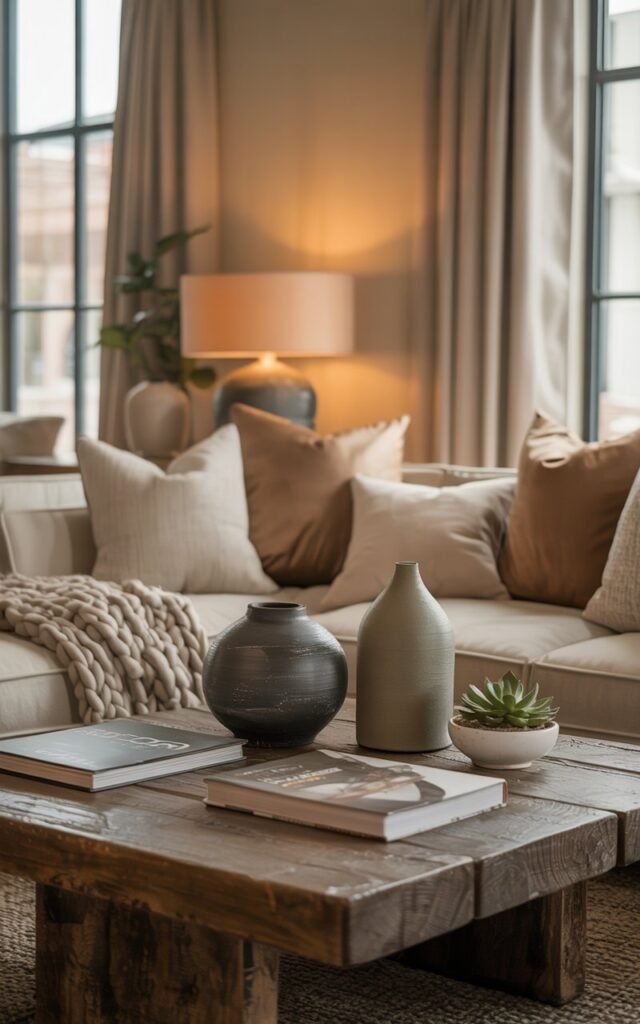
2026 is officially saying goodbye to boring beige rooms.
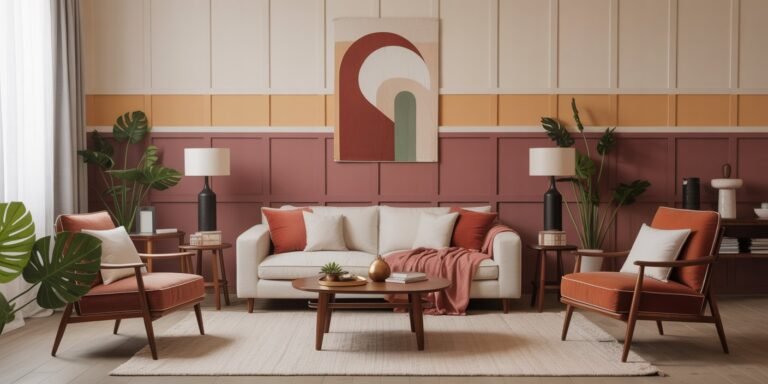
Instead of plain whites and flat neutrals, homes are leaning into soft, warm shades that still feel calm but have character — think creamy oatmeal, mushroom gray, warm taupe, gentle clay, pale caramel, and buttery ivory.
These colors don’t scream for attention, but they quietly make a room feel cozy and lived-in.
They’re forgiving with fingerprints (important if you have kids), they work with almost any furniture, and they instantly soften harsh lighting.
I love this trend because it makes your home feel expensive without actually being expensive.
Helpful ways readers can use this trend:
- Paint just one wall instead of the whole room
- Swap white throw pillows for warmer tones
- Add beige-on-beige layers (curtains, rugs, cushions)
- Choose textured fabrics like boucle or linen to avoid flatness
Fun family tip:
Let kids help pick between two neutral shades. When they feel involved, they complain less about changes — trust me.
Bonus styling trick:
Mix at least three shades of the same neutral in one space (for example: light cream curtains, taupe sofa, caramel cushions). That’s what makes it look intentional instead of plain.
This trend works especially well in living rooms, bedrooms, and open kitchens where you want calm energy but still want the space to feel warm and welcoming.
2. Curved Furniture That Softens the Whole Room
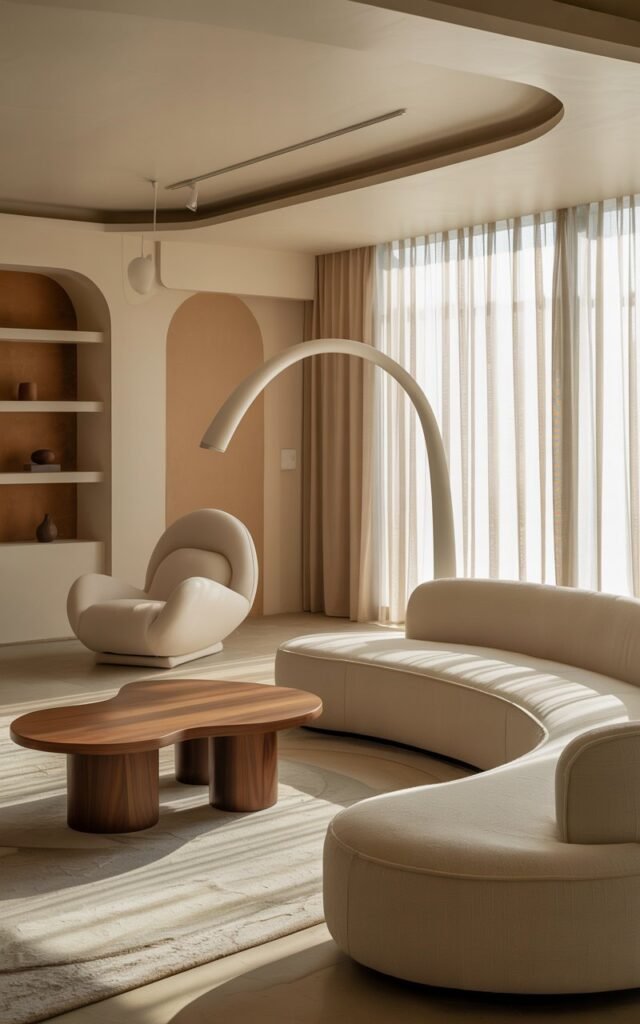
Straight lines are taking a back seat in 2026.
Everything is getting softer — rounded sofas, curved coffee tables, arched mirrors, even circular rugs.
And honestly, I love this one because it changes the mood of a room instantly.
We tried this by adding a rounded accent chair in our living room, and suddenly the space felt calmer. Less sharp.
More inviting. Even the kids naturally sit closer together when the furniture curves instead of corners them.
Curved pieces work especially well in busy family homes because they create better flow. You don’t bump your hips as often. Kids don’t crash into edges.
And rooms feel more relaxed without you having to move walls.
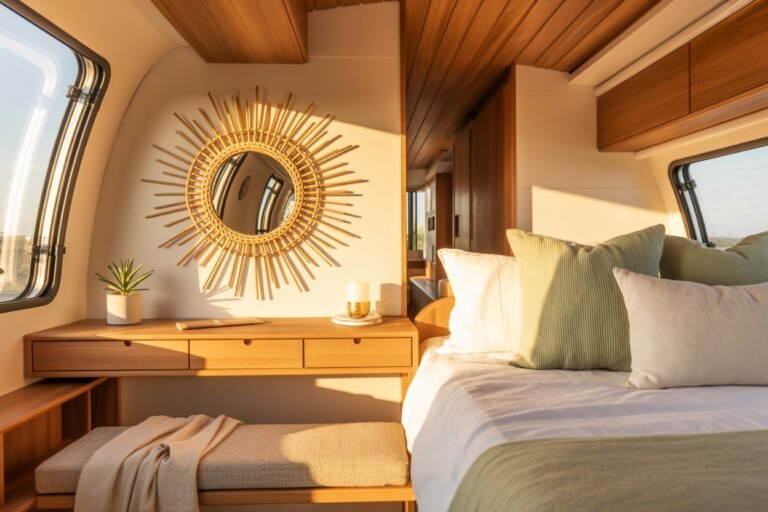
If you don’t want to replace big furniture, small swaps make a difference. A round mirror instead of a square one.
A curved lamp base. A soft-edged coffee table. Even a circular tray on your ottoman adds that gentle shape.
I also noticed curved furniture photographs beautifully for Pinterest — it makes rooms feel styled without trying too hard.
The trick is balance. Keep your main sofa if it’s straight, then soften it with rounded pillows or a curved side chair.
Too many curves can feel floaty, but one or two pieces create that 2026 vibe instantly.
3. Statement Lighting That Does More Than Just Light the Room
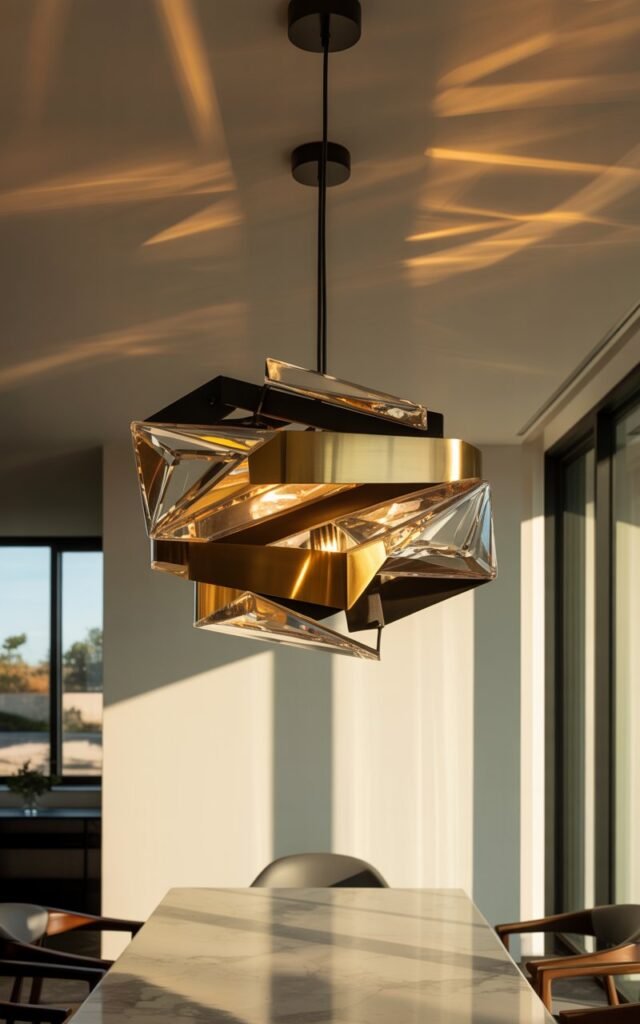
Lighting isn’t just functional anymore — in 2026, it’s becoming the personality of the space.
I noticed this when we swapped out a basic ceiling light for a softer pendant in our dining area.
Same room, same table, same chairs — but suddenly dinners felt warmer, photos looked better, and the whole space felt intentional.
That’s the power of statement lighting.
People are choosing oversized pendants, sculptural lamps, woven fixtures, and layered lighting instead of relying on one bright ceiling bulb. The goal is mood, not glare.
One thing that really works is mixing light sources. A floor lamp in one corner, a table lamp near the couch, and a soft overhead light gives you flexibility.
Bright for cleaning. Cozy for evenings. Calm for late-night scrolling after the kids are asleep.
Warm bulbs matter too. Cool white can make even beautiful rooms feel cold. Switching to warmer tones instantly makes everything feel more inviting.
If you’re working with a budget, start small. Change lampshades. Add plug-in wall sconces.
Replace harsh bulbs. Even fairy lights tucked behind plants or shelves add charm without effort.
Lighting in 2026 isn’t about being fancy. It’s about creating little pockets of comfort throughout your home.
4. Homes That Feel Collected, Not Perfect
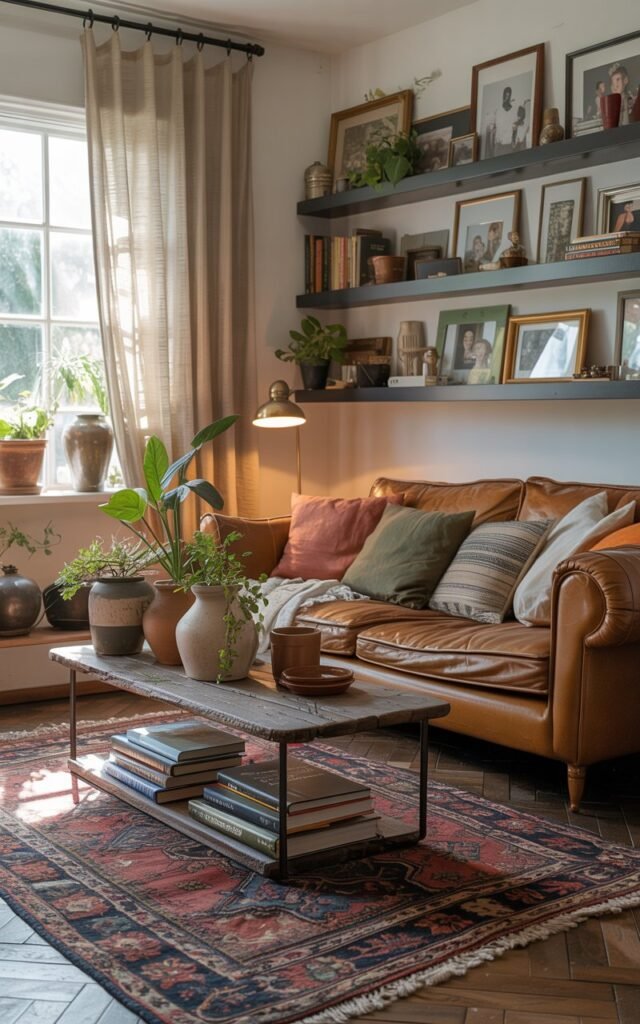
This might be my favorite trend of 2026.
Homes are moving away from matching furniture sets and showroom perfection.
Instead, spaces are starting to feel collected over time — layered with personal pieces, mixed textures, and items that actually mean something.
Think framed kids’ artwork beside thrifted finds. A vintage mirror paired with a modern sofa.
Handmade bowls on open shelves. Travel souvenirs mixed with everyday dishes.
It’s that “real home” feeling.
I started doing this by breaking up sets. Instead of matching side tables, we used one wooden stool and one small cabinet.
Instead of identical pillows, I mixed patterns and fabrics. The room immediately felt warmer and more personal.
The secret is contrast. Old with new. Smooth with rough. Neutral with one pop of color.
Even something simple like stacking books with a candle on top, or leaning framed photos instead of hanging everything, adds that lived-in look.
And here’s something I love: this trend takes pressure off. You don’t have to buy everything at once. You build your space slowly, one meaningful piece at a time.
That’s what makes a house feel like yours.
5. Cozy Textures Everywhere (Because Comfort Is the New Luxury)
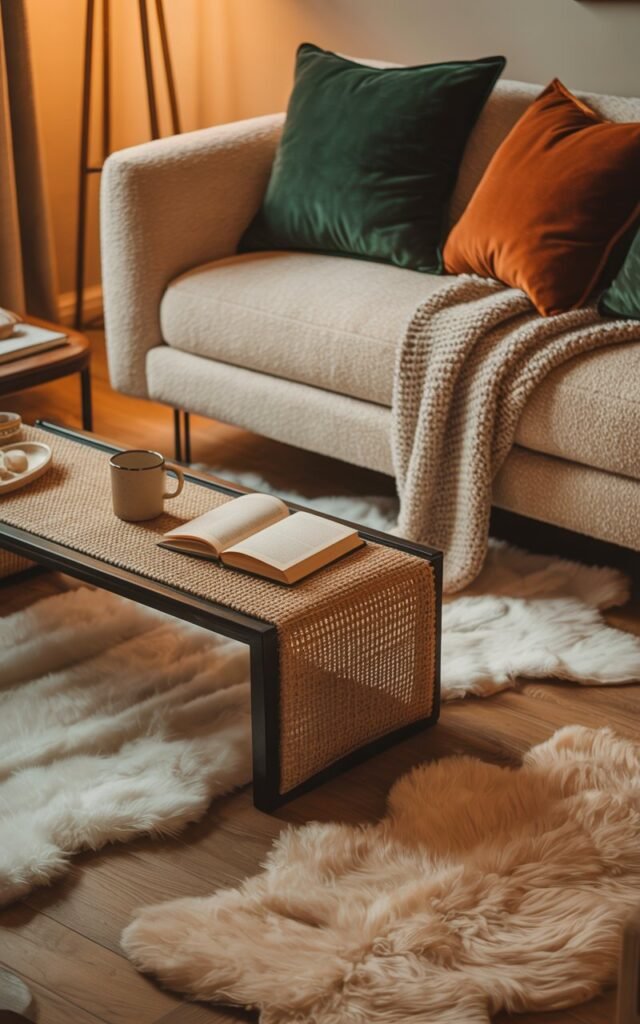
In 2026, homes aren’t just meant to look good — they’re meant to feel good.
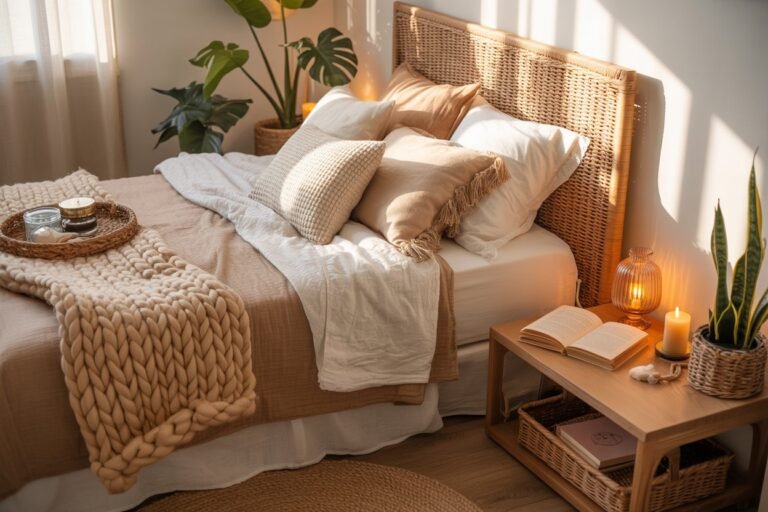
That’s why cozy textures are showing up everywhere. Soft rugs, chunky throws, linen curtains, boucle chairs, knitted pillows, and layered bedding are becoming must-haves.
I noticed this trend working its magic when I added a textured throw to our couch and swapped flat cushions for woven ones.
Suddenly the room felt warmer without changing any furniture.
Texture is what makes neutral spaces come alive.
If a room feels cold or unfinished, it usually just needs softness. A rug under the coffee table.
Curtains instead of bare windows. A blanket casually draped over a chair. These small touches change everything.
Bedrooms are getting extra cozy too — layered sheets, padded headboards, and oversized comforters that invite you to slow down.
Even kitchens are joining in with woven baskets, fabric runners, and soft bar stools.
The trick is mixing textures: smooth tables with fuzzy rugs, hard floors with plush seating, clean walls with flowing curtains.
That balance is what makes a space feel rich and welcoming.
And yes — your kids will steal the throws, your dog will nap on the rugs, and that’s exactly how it’s supposed to be.
6. Multifunctional Spaces That Actually Work
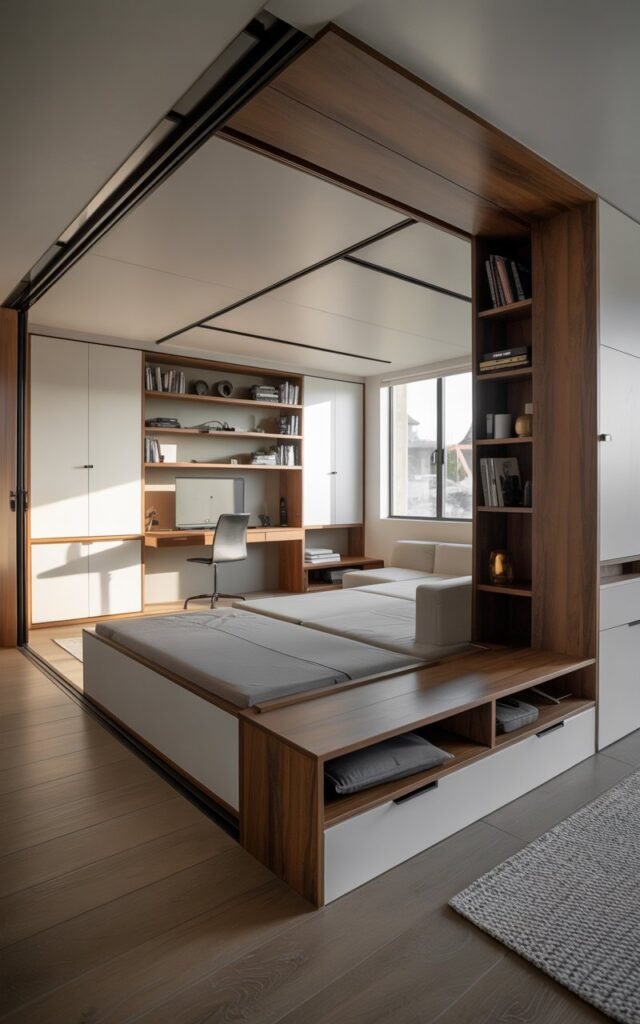
2026 is all about rooms that do more than one thing, especially for families like mine where the living room doubles as a homework station and the dining table becomes a craft zone.
The key is planning for flexibility without clutter. I realized this when we swapped our bulky coffee table for a lift-top version.
Suddenly, the living room could hold snacks, homework, puzzles, or laptop work — all without feeling messy.
Open shelving, foldable desks, nesting tables, and hidden storage are huge this year.
They let you adapt the space for movie nights, playdates, or quiet evenings without buying separate furniture for each scenario.
Even corners can serve double duty: a reading nook with a comfy chair and lamp can become a mini office for adults, or a spot for kids to do art projects.
The trick is intentional placement — make sure items are easy to move or hide when needed.
I love this trend because it saves money and stress. Instead of redesigning every room for every activity, you build a space that flows with your family’s life — and still looks stylish.
7. Biophilic Design — Bringing Nature Inside
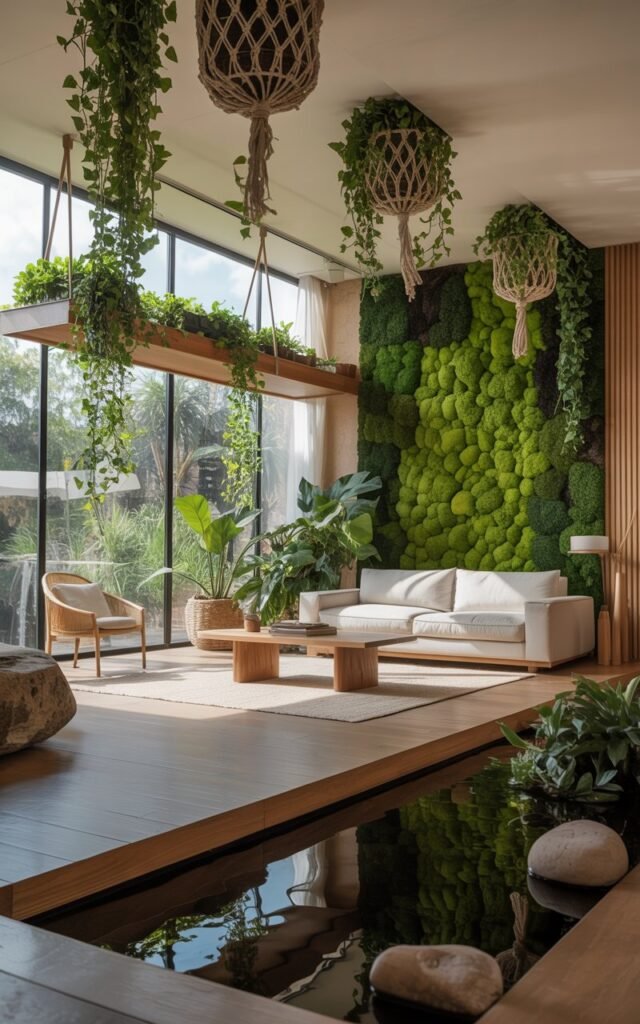
2026 homes are all about connecting with nature, even if your backyard is tiny or your city apartment has no garden. Plants, natural materials, and organic shapes are everywhere.
I added a few tall potted plants to our living room and small herbs on the kitchen windowsill, and it completely changed the energy of the space.
The room felt fresher, calmer, and somehow more alive. Even my kids started noticing the plants and asking to water them.
Natural wood furniture, stone accents, jute rugs, and woven baskets are part of the same trend. They mix well with modern or neutral palettes and make rooms feel grounded.
You don’t have to go overboard. A single large leafy plant, a hanging fern, or a few succulents scattered on shelves can make a huge difference.
Adding texture with natural materials — like rattan lamps or wooden trays — amplifies the effect.
The beauty of this trend is that it’s not just for looks. It improves mood, air quality, and even encourages your family to slow down and notice the little details in your home.
8. Bold Patterns in Small Doses
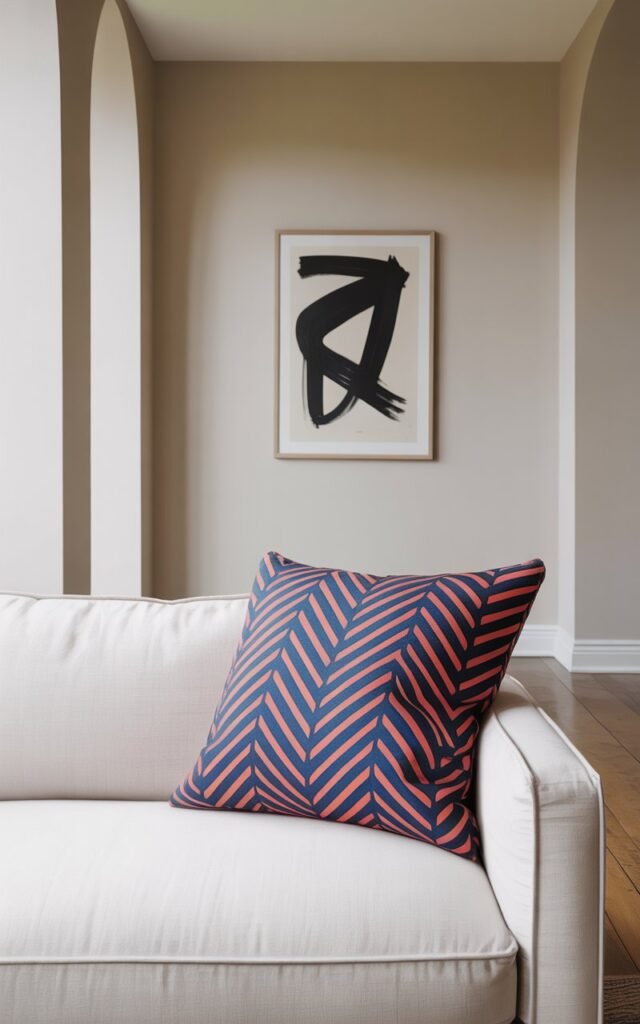
Bold patterns are making a comeback — but in a way that feels intentional, not overwhelming.
Think patterned cushions, statement rugs, wallpapered accent walls, or printed curtains.
I tried this with a geometric rug in our family room. It added energy without clashing with our neutral sofa, and suddenly the whole space felt more playful and alive.
Even the kids noticed and argued over which corner was theirs!
The key is balance. Pair one bold piece with neutral surroundings so it pops without taking over.
You can mix subtle prints, like stripes with florals, but keep colors in the same palette for harmony.
Small swaps, like patterned pillows or a bright throw, are enough to refresh a room instantly.
It’s also budget-friendly — you don’t need to redo the entire floor or walls to get the effect.
This trend adds personality while keeping spaces practical for everyday life, especially when kids and pets are part of the household.
9. Smart Storage That Actually Looks Good
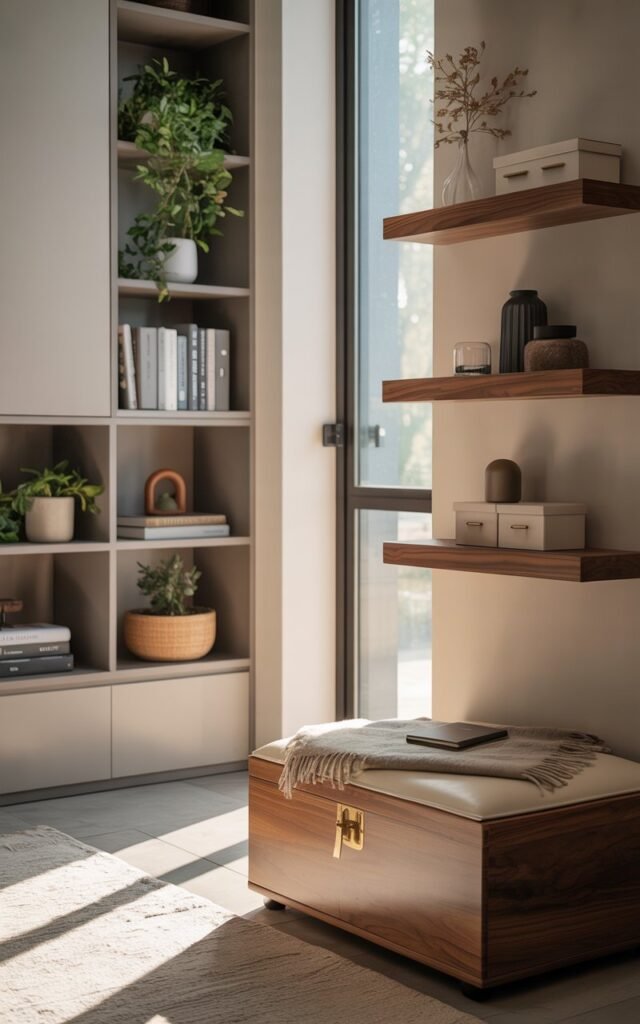
Clutter is the enemy of style, and this trend is all about making storage both functional and beautiful.
I realized how much this helps when we replaced our bulky plastic bins with sleek baskets, built-in shelves, and hidden compartments in the living room.
Everything has a place — toys, blankets, school supplies — but it doesn’t feel like a storage room.
The trick is to think vertically and creatively.
Wall-mounted shelves, under-sofa drawers, and multi-purpose furniture like ottomans with hidden storage keep the floor clear and make small spaces feel bigger.
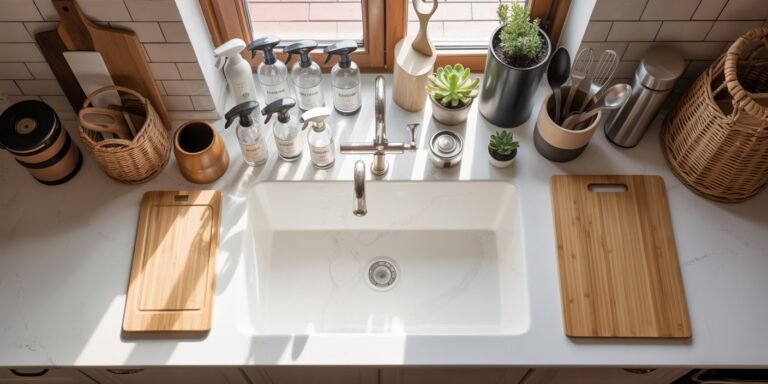
I also love using attractive containers. Woven baskets, wooden boxes, or fabric bins can hide everyday clutter while still looking intentional.
Even open shelving works if you mix storage boxes with decorative items — it’s organized but not sterile.
Smart storage means less stress, faster cleanup, and a home that actually functions for families without losing style.
10. Personal Galleries and Meaningful Displays
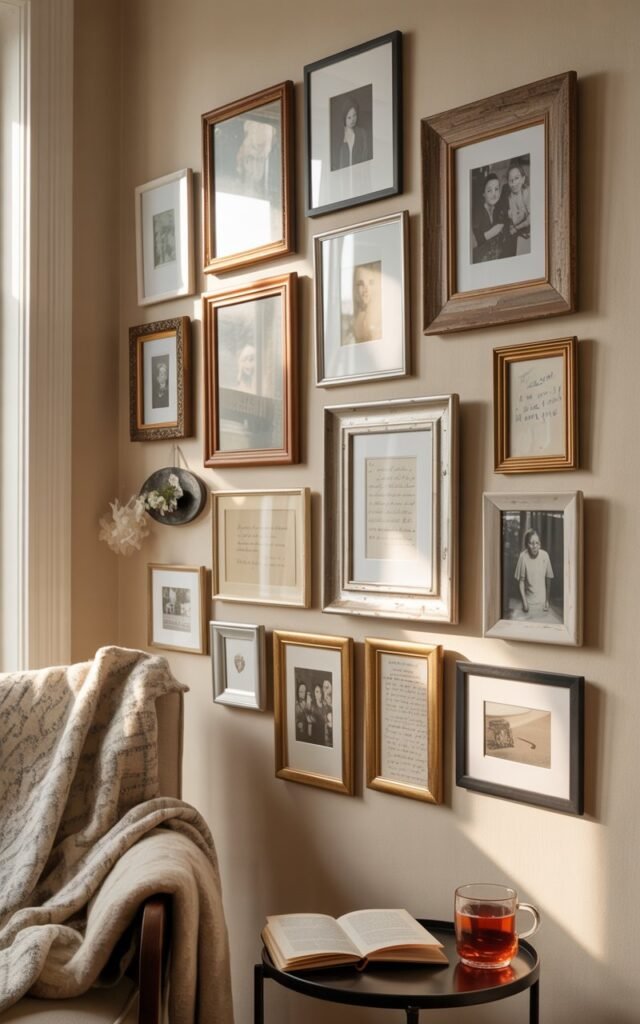
Instead of generic wall art, homes are leaning into personalized galleries that tell your story — photos, souvenirs, kids’ artwork, travel mementos, and meaningful objects.
I started by creating a small gallery wall in our hallway with family photos, a few postcards from trips, and even my kids’ school drawings.
It instantly made the space feel alive and uniquely ours. Guests stop and notice, and the kids love seeing their work on display.
The key is curation. Mix frame sizes, textures, and shapes, but keep a consistent color palette so it doesn’t feel chaotic.
You can also rotate items over time — a new piece of artwork, a seasonal object, or even a travel find.
This trend works everywhere: hallways, living rooms, kitchens, or bedrooms. And it’s not just for looks — it sparks conversation, nostalgia, and connection.
A home filled with things that matter becomes more than a space; it becomes a story.
Conclusion

Walking through our home these days feels different. Every corner has a purpose, every texture invites touch, and every piece tells a little story.
From soft neutrals that calm the chaos to curved furniture that makes movement feel natural, from statement lighting that sets the mood to personal galleries that celebrate our life, these trends aren’t just design ideas — they’re ways to make a home fit your family, your routine, and your personality.
The beauty of these trends is that you don’t have to renovate everything at once. Small swaps — a throw pillow, a new rug, a plant, or even just rearranging furniture — can transform the energy of a room.
Spaces can be practical for busy mornings, cozy for evenings, and playful for kids and pets, all while staying stylish and intentional.
At the end of the day, a home isn’t about perfection. It’s about creating a space where laughter happens, memories are made, and everyone — including your family dog, if you have one — feels comfortable, happy, and truly at home.
These 10 trends are not just decorating tips. They’re invitations to live in your space fully, enjoy it daily, and make it your own.